 Anacortes Siding
 Roofing for a Salt Air, High-Rain Climate
Oak Harbor sits close enough to open saltwater that roofs here age differently than roofs fifty miles inland. Between the salt-laden air coming off Puget Sound, the driving rain that comes sideways during winter storms, and a moss season that can run eight months out of the year in shaded areas, a roof in this part of Island and Skagit County works harder than most homeowners realize. We work throughout the region, including the Fidalgo Island side around Anacortes, and we see the same failure patterns over and over on Oak Harbor homes: corroded fasteners, moss-lifted shingles, and flashing that gave out years before the shingles themselves did.
A roof replacement done right in this climate isn't just about swapping old shingles for new ones. It's about choosing materials and details that actually hold up to salt exposure and constant moisture, and installing them correctly the first time.
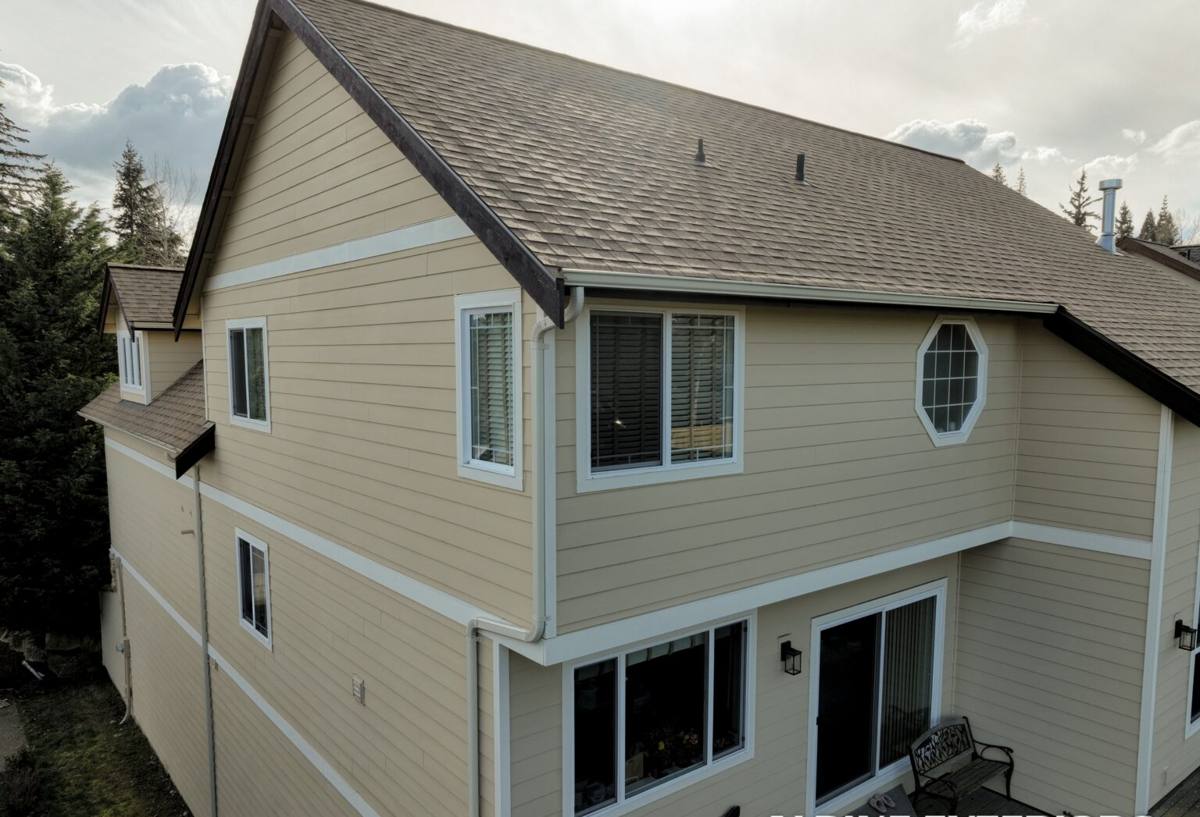
Signs an Oak Harbor Roof Needs Replacement, Not Another Repair
Every roof eventually crosses a line where patching stops making financial sense. Some of the clearest signs we look for:
- Granule loss heavy enough that you can see bare, shiny patches on multiple shingles, not just one or two
- Moss and algae that keep coming back within a season or two of cleaning, especially on north-facing slopes
- Curling, cupping, or cracked shingles across large sections rather than isolated spots
- Rusted or corroded flashing around chimneys, vents, and valleys — common here because of salt air
- Soft spots in the decking you can feel when walking the roof, a sign moisture has gotten underneath
- Daylight visible through the roof deck from inside the attic, or staining on attic insulation
- A roof that's 20+ years old on architectural shingles, or older on lower-grade materials
If you're only seeing one or two of these, a repair might still be the right call. When several show up together, replacement is usually the more honest recommendation, and we'll tell you that directly during an inspection rather than stringing out repairs on a roof that's already failing structurally.
What a Correct Roof Replacement Actually Involves
Tear-Off and Deck Inspection
We remove the old roofing down to the deck rather than layering new shingles over old — layering traps moisture and hides deck damage, which is a bad trade-off in a climate that already sees this much rain. Once the deck is exposed, we check every sheet for soft spots, delamination, and rot, and replace what's compromised before anything new goes down.
Underlayment and Water Barrier
Underlayment is where a lot of roofs quietly succeed or fail. In areas that see driving, wind-blown rain, synthetic underlayment with self-adhering ice-and-water membrane at eaves, valleys, and roof penetrations gives water fewer paths to sneak underneath the shingle layer, particularly during the sideways rain events that come off the Sound in winter.
Flashing
Flashing around chimneys, skylights, vent pipes, and wall intersections is one of the most common failure points on older roofs here, largely due to corrosion from salt air. We replace flashing as part of a full roof job rather than reusing old metal, and we use materials chosen to hold up to coastal exposure rather than the cheapest option available.
Ventilation
A roof that isn't ventilated correctly traps heat and moisture in the attic, which shortens shingle life and can encourage moss growth from underneath. We check intake and exhaust balance as part of every replacement and correct it when the existing setup is inadequate.
Material Options for Coastal Skagit and Island County Homes
There's no single "best" roofing material for every home — the right choice depends on budget, roof pitch, how much shade and moss pressure the roof sees, and how long you plan to stay in the home. Here's how the main categories compare for a climate like Oak Harbor's:
| Material | Typical Lifespan | How It Handles Salt Air & Moss | Trade-Offs |
|---|---|---|---|
| Architectural asphalt shingle | 25–30 years | Good with proper flashing and algae-resistant granules; still needs periodic moss treatment in shaded areas | Best value; widest color and style range |
| Standing seam metal | 40–50+ years | Sheds moss and moisture very well; needs coastal-rated coatings and fasteners to resist salt corrosion | Higher upfront cost; installation quality matters more |
| Synthetic/composite shingle | 30–50 years | Resists moisture absorption well; performance varies by product line | Mid-to-upper cost range; fewer installers experienced with it |
| 3-tab asphalt shingle | 15–20 years | Wears faster under constant moisture and moss pressure than architectural shingle | Lowest upfront cost; shortest lifespan in this climate |
We don't push one material as universally "right." What we will say plainly: on a home with heavy tree shade or a north-facing slope that stays damp most of the year, spending a bit more on a moss- and moisture-resistant option usually pays for itself in fewer callbacks and a longer service life.
Our Roof Replacement Process
- On-site inspection. We walk the roof (weather permitting) and check the attic, looking for the deck condition, ventilation setup, and current failure points — not just the shingle surface.
- Written estimate. You get a clear scope of work and price before anything is scheduled, including what happens if we find deck damage once tear-off starts.
- Material selection. We walk through the options that fit your budget and your roof's exposure, without pressure toward the most expensive choice.
- Site protection. Landscaping, siding, and gutters get protected before tear-off begins, and we manage debris and magnetic nail sweeps as part of the job, not as an add-on.
- Tear-off and deck repair. Old roofing comes off, the deck gets inspected sheet by sheet, and any damaged sections are replaced.
- Installation. Underlayment, flashing, and the new roofing material go on in that order, following manufacturer specifications for the product installed.
- Final walkthrough. We review the finished roof with you, confirm ventilation and gutter tie-ins are correct, and answer any questions before we consider the job done.
What Drives the Cost of a Roof Replacement
Roof replacement costs vary enough from home to home that we don't quote a number without seeing the roof, but these are the factors that move the price up or down:
| Factor | Effect on Cost |
|---|---|
| Roof size and number of facets/valleys | More material and labor time; complex rooflines cost more per square than simple gables |
| Roof pitch | Steep roofs require more safety setup and slower work, raising labor cost |
| Number of existing layers | Extra tear-off labor and disposal cost if the roof has been layered before |
| Deck condition | Rotted or soft decking found during tear-off adds material and labor not visible during the initial estimate |
| Material choice | Asphalt is the most budget-friendly; metal and premium synthetics cost more upfront but often last longer |
| Access | Difficult access, tall homes, or tight lot lines can add setup and staging time |
We always disclose deck damage before repairing it rather than surprising you with it on the final invoice — you approve any change in scope before we proceed.
Why Local Experience in This Area Matters
A roofing crew that mainly works drier, inland climates can still do competent work, but they're less likely to catch the details that matter specifically here: fastener and flashing materials rated for salt exposure, moss-prone areas that need extra ventilation or treatment, and the wind-driven rain patterns that expose weak flashing details faster than in a typical inland install. We work Fidalgo Island and the surrounding Skagit and Island County communities regularly, including Oak Harbor, so we're not guessing at how a roof will hold up here — we're building to what we've already seen fail and correcting for it.
Permitting and inspection requirements can also vary by jurisdiction, and getting that wrong causes delays. Working locally means we already know the process for your area instead of learning it on your job.
Protecting Your Roof After Installation
A new roof still needs basic upkeep to hit its full lifespan in this climate:
- Keep gutters clear so water isn't backing up under the shingle edge, especially during fall storms
- Have moss treated or removed before it establishes a thick mat, rather than after — moss holds moisture against the shingle surface
- Trim back overhanging branches that keep sections of the roof shaded and damp
- Schedule a visual inspection every year or two, and always after a major windstorm
- Address small flashing or sealant issues promptly — they're inexpensive to fix early and expensive to ignore
Ready to Talk Through Your Roof?
If your Oak Harbor home's roof is showing its age, or you just want an honest read on how much life is left in it, we're happy to take a look. The estimate is free, there's no pressure to sign anything on the spot, and you'll get a straight answer about whether you need a repair, a full replacement, or nothing at all right now. Fill out the form below to get started.