 Anacortes Siding
 Deck Building Built for Sedro-Woolley's Weather, Not Just Its Views
Sedro-Woolley sits in the Skagit Valley, ringed by farmland and timber, with the kind of weather that makes a deck either a genuine extension of the house or a slow-motion maintenance headache. A deck built to a generic national spec doesn't hold up the same way here as it would in a drier climate. The framing, the fasteners, the gaps between boards, and even the direction a deck faces all matter more once you factor in how much of the year this ground stays damp. We build decks specifically for how Skagit County weather actually behaves, not how a spec sheet assumes it behaves somewhere else.
That distinction matters most in the parts of a deck nobody looks at after the ribbon-cutting: the ledger flashing, the joist tops, the footings, the space under the first course of boards. Those are the areas that fail first in this climate, and they're also the areas easiest to get wrong if a crew is used to building in a different part of the country.
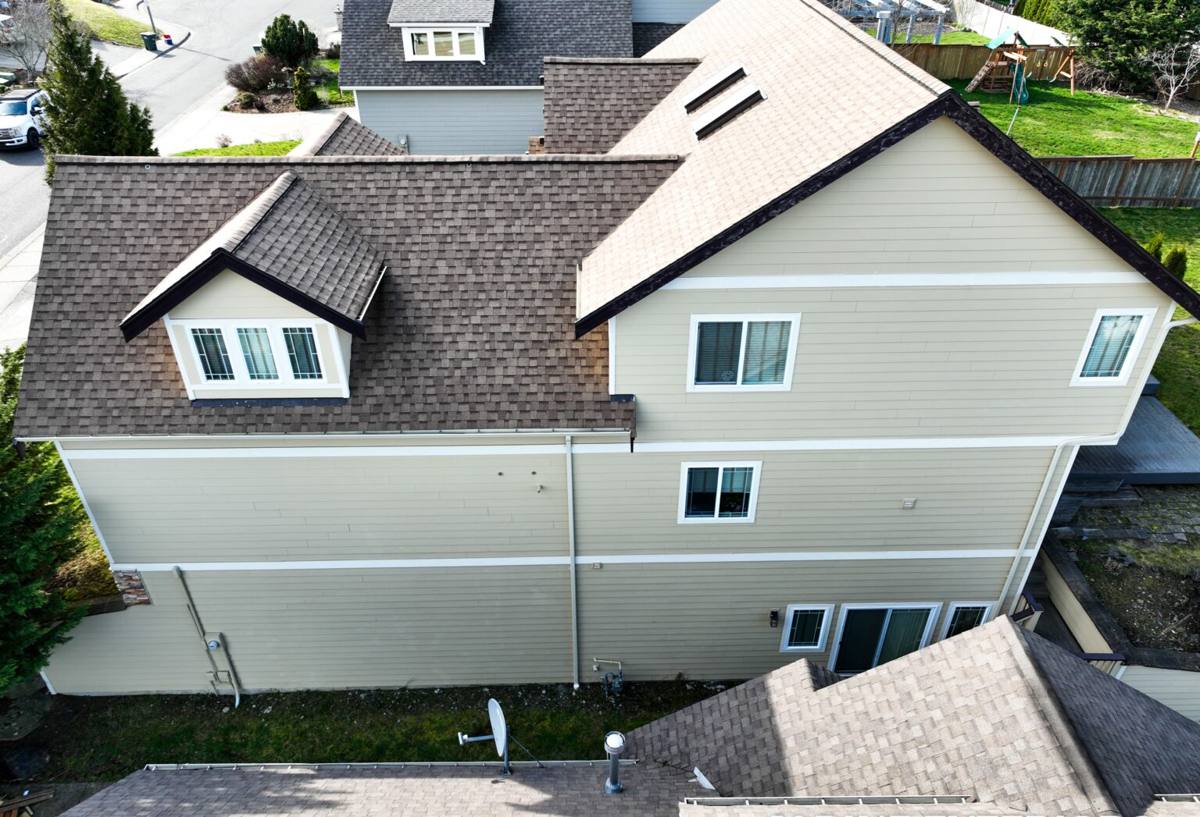
What Skagit County Weather Actually Does to a Deck
Sedro-Woolley is inland enough that salt air isn't the daily factor it is for homes closer to the water, but it's still part of the broader Skagit County exposure, and homes on the outskirts or with unobstructed westerly exposure do feel some of it during storm systems moving in off the coast. The bigger, more constant issues locally are driving rain and a moss season that runs longer here than most homeowners expect.
- Driving rain — wind-driven rain doesn't just fall straight down; it gets pushed sideways into fascia boards, ledger connections, and stair stringers, finding gaps that a calm-weather install would never expose.
- Standing moisture — shaded decks under trees or on the north side of a house can stay damp for days after a storm, which is exactly the condition mold, algae, and rot organisms need.
- Long moss season — moss doesn't just grow on roofs. It takes hold on decking, especially where boards are laid tight or where debris collects between boards, and it turns a walking surface slick and dangerous well before it looks bad.
- Freeze-thaw cycling — Skagit Valley winters aren't brutal, but repeated freeze and thaw on wet wood and around footings accelerates cracking and fastener movement over the years.
None of this means a deck can't last decades in Sedro-Woolley. It means the build has to account for water movement first and aesthetics second — because a deck that sheds and drains correctly will still look good in ten years, and one that doesn't won't.
Choosing the Right Decking Material for This Climate
There's no single "best" decking material — there's a best material for a given budget, sun exposure, and how much upkeep a homeowner actually wants to do. Here's how the common options compare for a Skagit County application specifically.
| Material | Moisture Behavior Here | Maintenance | Typical Lifespan |
|---|---|---|---|
| Pressure-treated lumber | Handles wet cycles well if properly sealed; can cup or split if left unfinished | Needs re-staining/sealing every 2-3 years in this climate | 15-25 years |
| Cedar | Naturally moisture- and insect-resistant, but softens faster in constant damp shade | Regular oiling or staining recommended annually in shaded spots | 15-20 years |
| Composite decking | Doesn't absorb water or rot, but can stay slicker with moss/algae film if not cleaned | Periodic washing; no staining or sealing | 25-30+ years |
| PVC decking | Fully moisture-proof, best resistance to mold staining | Occasional washing only | 25-30+ years |
Composite and PVC decking have become popular in this region specifically because homeowners are tired of the annual re-sealing cycle that wood demands here. That said, wood still has a place — it's less expensive up front, it's easier to repair a single damaged board, and some homeowners simply prefer the look and are willing to keep up with maintenance. We'll walk through the honest trade-offs for your specific site rather than pushing one material by default.
A Note on Board Spacing and Moss
Regardless of material, board spacing and airflow underneath the deck matter more here than in a drier climate. Boards installed too tight, or over a substructure with poor ventilation, trap moisture and give moss and algae a foothold even on composite decking. Proper gapping and a substructure that lets air move underneath is a small detail that pays off every wet season.
Where Decks Actually Fail — Framing and Substructure
Most deck failures aren't in the decking boards themselves — they're in the parts underneath that were never built to shed water correctly in the first place.
Ledger Board Flashing
The ledger board — where the deck attaches to the house — is the single most common failure point on decks in this climate. Water that gets behind an improperly flashed ledger doesn't just rot the ledger; it can work its way into the house's rim joist and wall framing. Correct flashing, with proper overlap and a drainage gap, is non-negotiable on every deck we build.
Footings and Frost Depth
Footings need to be set below the local frost line and sized correctly for the soil conditions on your lot. Skagit Valley soil varies from sandy loam to heavier clay depending on where you are, and clay-heavy soil holds water longer around a footing, which affects how it should be poured and drained.
Joist Protection
Joist tops take the brunt of standing water that runs off decking boards. Joist tape or a comparable moisture barrier over the top of each joist adds meaningful years to a deck's structural life for a relatively small cost, and it's a detail that's easy to skip and easy to regret.
Fasteners and Hardware
Coated or stainless fasteners rated for ground contact and outdoor exposure are worth the upfront cost difference. Standard fasteners corrode faster in a climate with this much sustained moisture, and a corroding fastener eventually means a loose board or a failing connection.
Our Deck Building Process
1. On-Site Consultation and Design
We walk the property, look at sun and shade exposure, drainage patterns, and how the deck will actually be used, then talk through material and layout options honestly — including what each option will cost to maintain over time, not just to build.
2. Permitting
Most decks above a certain height, or attached to the house, require a building permit in Sedro-Woolley and unincorporated Skagit County. We handle the permit process and make sure footing depth, guardrail height, and stair specifications meet current code before inspection, so there are no surprises partway through the build.
3. Demolition and Site Prep (if replacing an existing deck)
If we're replacing an old deck, we remove it and inspect the ledger connection and rim joist behind it for hidden water damage before any new framing goes up. This is often where older decks reveal problems that weren't visible from the surface.
4. Framing
Footings, posts, beams, and joists go in with attention to drainage, ventilation underneath the deck, and correct spacing for the decking material chosen. This is the stage that determines whether the deck lasts 15 years or 30.
5. Decking, Railings, and Stairs
Decking boards are installed with proper gapping, railings and guardrails are set to code height and spacing, and stairs are built with attention to rise-and-run consistency and slip resistance — an important detail in a climate where wet or mossy steps are a real fall risk.
6. Final Walkthrough
We walk the finished deck with the homeowner, cover basic maintenance expectations for the material chosen, and make sure everything is signed off before we consider the job done.
Permits and Code Basics in Sedro-Woolley
Requirements vary by jurisdiction and by the specifics of a given project, but a few things apply broadly to most deck builds in this area:
- Decks attached to the house or elevated above a certain height typically require a permit and inspection.
- Guardrails are required above a specific height threshold, with maximum baluster spacing set by code to prevent a child from passing through.
- Footings must be set to the required frost depth for the area.
- Stair rise and run must fall within a consistent range for safety.
We handle the permit application and inspection scheduling as part of the build, so homeowners aren't left navigating that process on their own.
Maintenance Checklist for a Skagit County Deck
Whatever material you choose, a little seasonal attention goes a long way in this climate. A rough yearly checklist:
- Sweep debris (leaves, needles, seed pods) off the deck surface regularly, especially in shaded areas where it holds moisture.
- Rinse or scrub visible moss and algae buildup before it gets a foothold — early spring and late fall are the key windows here.
- Check gaps between boards for trapped debris that blocks drainage.
- Inspect fasteners and railing connections annually for looseness or corrosion.
- For wood decking, plan on re-staining or re-sealing on a 2-3 year cycle depending on sun exposure.
- Check the ledger board area and any flashing for signs of water staining or soft wood.
- Confirm gutters and downspouts near the deck aren't dumping extra water onto or under it.
What Affects the Cost of a Deck Build
Every deck is priced around the specifics of the site, so we don't quote firm numbers without seeing the property, but these are the main factors that move the price up or down:
| Factor | Why It Matters |
|---|---|
| Material choice | Composite and PVC cost more upfront than wood but require far less long-term maintenance |
| Deck height/elevation | Taller decks need more substantial framing, footings, and often stairs and guardrails |
| Size and shape | Multi-level decks or non-rectangular layouts add labor and material complexity |
| Site access | Difficult access for equipment or materials can add time to a project |
| Railing style | Cable, glass, and composite railing systems cost more than standard wood balusters |
| Existing deck removal | Tear-off and disposal of an old deck adds to the scope of a replacement project |
Broadly, a straightforward pressure-treated deck will run less than a composite or PVC deck of the same size, but the gap narrows over time once you factor in the staining and sealing wood requires. We lay out the real cost picture, including maintenance over the years, so the decision is based on total cost of ownership, not just the build-day invoice.
Why Hire a Crew That Already Works in Sedro-Woolley
A deck builder who works this area regularly already knows how local soil drains, how much sun a given lot orientation gets through the year, and which details actually matter once the driving rain and long moss season set in. That's not something a crew coming from outside the region necessarily accounts for — they may build a technically sound deck for a different climate, and it will show in five years when moisture problems show up that a Skagit-aware build would have avoided from the start. We're also familiar with the local permitting process, which keeps the project moving instead of stalling on paperwork or inspection delays.
If you're planning a new deck or need to replace one that's showing its age, we'll come look at your property, talk through material options honestly, and give you a straightforward, no-pressure estimate. There's no cost or obligation to have us take a look — just fill out the form below to get started.