 Anacortes Siding
 Building Decks for Ship Harbor's Marine Climate
Ship Harbor sits close enough to the water that every deck we build there has to answer to the same three things: salt-laden air, driving rain off the Strait, and a moss season that can run from October clear through April. That's a different set of demands than a deck we'd build inland in Skagit County, even ten minutes away. A deck built without that in mind might look fine for a year or two, then start showing fastener corrosion, soft spots under the railing posts, or a green film on the walking surface that never fully goes away.
We've worked enough properties in and around Ship Harbor to know what actually holds up here versus what looks good on a spec sheet. This page walks through what we build, why we build it that way, and what you should expect if you're planning a new deck or replacing an aging one on your Ship Harbor property.
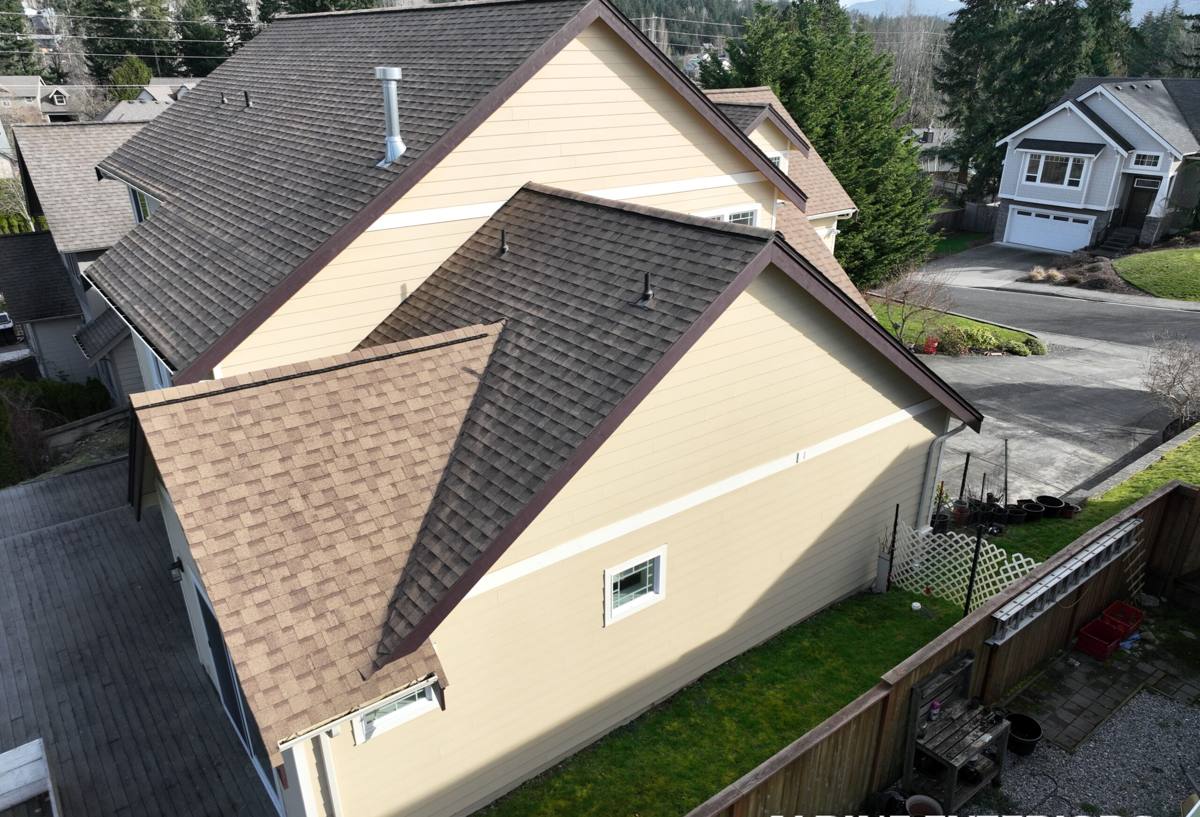
What Anacortes' Marine Exposure Does to a Deck
Anacortes sits at the north end of Skagit County, wrapped by saltwater on three sides, and Ship Harbor's location puts homes there directly in the path of onshore weather. That combination creates a handful of specific failure points we watch for:
- Fastener corrosion: Standard deck screws and nails can start rusting within a season or two when salt air is a regular factor. Rust stains bleed into the decking around every fastener head.
- Hidden moisture in framing: Driving rain doesn't just fall straight down here — wind pushes it sideways under railings and into ledger connections, joist hangers, and post bases where it can sit unnoticed.
- Moss and algae buildup: Shaded areas, north-facing decks, and anything under tree cover stay damp long enough for moss to take hold. Moss holds moisture against the deck surface and turns walking areas slick.
- UV and weather cycling: Even with our relatively mild summers, the freeze-thaw and wet-dry cycling through fall and winter stresses joints, caulking, and finishes faster than a drier climate would.
None of this means a deck can't last decades in Ship Harbor. It means the build has to account for these conditions from the framing up, not just at the surface.
Getting the Structure Right First
Fasteners and Hardware
For coastal and near-coastal builds, we use stainless steel or high-grade coated fasteners and connectors rated for corrosive exposure, not the standard galvanized hardware that's fine for a drier, inland lot. This costs more up front. It's also the single biggest factor in whether a deck's structural connections are still sound in fifteen years or starting to fail in five.
Ledger and Flashing Details
Where a deck attaches to the house, water intrusion at the ledger board is one of the most common — and most expensive — failures we see on older decks. Proper flashing, correctly lapped and sealed, keeps water from working its way behind the siding and into the house framing. This is not a place to cut corners, and it's often invisible once the deck is finished, which is exactly why it matters that whoever builds it does it right the first time.
Post Bases and Footings
Wood posts set directly in concrete or sitting in standing water at the base are a slow-motion problem in a wet climate. We isolate post bases from direct ground and concrete contact with proper post base hardware, and we grade around footings so water sheds away rather than pooling.
Decking Material Choices for a Ship Harbor Property
There's no single "best" decking material — there's a best material for your budget, your maintenance appetite, and how exposed your specific site is. Here's how the common options actually compare in this climate:
| Material | Moisture/Salt Behavior | Maintenance | Typical Lifespan Here |
|---|---|---|---|
| Pressure-treated wood | Good if properly sealed and re-sealed; end grain and fastener holes are vulnerable points | Annual cleaning, re-sealing every 1-3 years | 15-20 years with upkeep |
| Cedar | Naturally rot- and insect-resistant; still needs finish maintenance in salt air | Regular cleaning, periodic oil or stain | 15-25 years with upkeep |
| Composite decking | Doesn't absorb moisture or rot; some early-generation boards showed mold on the surface in shaded, damp spots | Periodic washing, no sealing/staining | 25-30+ years, manufacturer-dependent |
| PVC/capped composite | Fully sealed surface, strong moisture and salt resistance | Lowest maintenance of the group | 25-30+ years, manufacturer-dependent |
We'll talk through this with you honestly based on your budget and how much maintenance you actually want to do. A well-maintained cedar deck can outperform a neglected composite one, and vice versa. What matters more than the marketing on the box is whether the material fits how you'll actually use and care for the deck.
A Note on Railings and Fasteners at the Surface
Whatever decking you choose, railing posts and the fasteners that show at the surface are worth extra attention in this climate. Hidden fastener systems reduce the number of exposed metal points where corrosion and staining can start, and they keep the walking surface cleaner-looking longer. We'll walk you through the tradeoffs — hidden fasteners cost more and take longer to install, but they hold up better and look better over time in a place like Ship Harbor.
Designing for Moss and Standing Water
A deck's design has as much to do with moss control as the material does. A few things we build into every Ship Harbor project:
- Proper gaps between boards for drainage and airflow underneath
- Grading and joist layout that avoids flat, low spots where water can pool
- Attention to sun exposure and shade patterns on your specific lot when planning layout and any structure above the deck
- Ventilation underneath the deck so moisture doesn't get trapped against the framing
None of this eliminates moss entirely — nothing does, in a climate this wet. But a deck designed with drainage and airflow in mind will need far less scrubbing and pressure washing than one that traps water against the surface.
Our Process, Start to Finish
1. On-Site Assessment
We come out and look at your actual lot — sun exposure, drainage, proximity to water, existing structure if you're replacing a deck, and how you plan to use the space. Ship Harbor lots vary enough in exposure that a design that works two streets over might not be right for your specific site.
2. Design and Material Selection
We go over layout, decking material, railing style, and any built-in features (stairs, benches, privacy screening) along with honest cost and maintenance tradeoffs for each option.
3. Permitting
Deck projects in the City of Anacortes typically require a building permit, especially for decks attached to the house or elevated above a certain height. We handle the permit process as part of the job so you're not chasing paperwork.
4. Demolition and Site Prep (Replacement Projects)
If we're replacing an existing deck, we assess the ledger connection and framing underneath before we commit to a full rebuild plan — sometimes what looks like a surface problem is actually a framing problem, and we want to know that before we start, not after.
5. Framing and Structural Work
This is where the corrosion-resistant hardware, proper flashing, and footing work happen. It's the least visible part of the job and the most important.
6. Decking, Railing, and Finish Work
Surface installation, railing systems, stairs, and any final trim or finish work.
7. Final Walkthrough
We walk the finished deck with you, point out any maintenance you'll want to keep up with, and answer questions before we consider the job done.
What to Check Before Hiring Anyone for Deck Work in Ship Harbor
Coastal deck construction has enough moving parts — permitting, structural connections, material behavior in salt air — that it's worth being specific about who you hire. A few things worth asking any contractor:
- Are they licensed and insured to do structural work in Washington State?
- Do they pull permits through the City of Anacortes, or expect you to handle that?
- Will they specify corrosion-resistant fasteners and hardware for a coastal site, or default to standard galvanized hardware?
- Can they explain their flashing and ledger detail before work starts, not just after something goes wrong?
- Do they have experience specifically with decks in Anacortes and similar coastal Skagit County locations, versus general contracting inland?
A crew that already works this area knows the difference between a deck built for a dry inland lot and one built for a place where salt air and driving rain are part of daily weather. That experience shows up in the details you can't see once the project's finished — the hardware, the flashing, the drainage — which are exactly the details that determine whether the deck is still solid in twenty years.
Maintaining a Deck in This Climate
Even a well-built deck needs some seasonal attention here. A short list that applies to most Ship Harbor decks regardless of material:
- Clear leaves and debris from between boards and off the surface before fall rains set in
- Keep gutters and downspouts near the deck clear so runoff isn't dumping directly onto or under it
- Check and clean any moss buildup in shaded areas before it spreads across the walking surface
- Inspect railing posts and stair connections annually for movement or soft spots
- Re-seal or re-stain wood decking on the schedule appropriate to that product — don't wait until it's visibly gray and dry
We're happy to talk through a maintenance schedule specific to your material choice when we build your deck, so you know what to expect and when.
What a Ship Harbor Deck Project Typically Involves
Every property is different, but most projects we do in this area fall into a few categories: full new deck construction on a home that never had one, replacement of an aging or failing deck, and expansion or reconfiguration of an existing deck that no longer fits how the homeowners use their outdoor space. Budget ranges vary widely based on size, material, elevation, and railing complexity, and we'll give you a clear, itemized estimate before any work starts — no surprise change orders for structural items we should have caught in the initial assessment.
If you're planning a new deck or need to replace one that's showing its age, we'll come take a look and give you a straightforward, no-pressure estimate based on your actual property and what it needs. Use the form below to get started.