 Anacortes Siding
 Ship Harbor Sits Right Where Weather Meets Wood
Ship Harbor is one of the more exposed pockets of Fidalgo Island. Homes here sit close to open water, catching salt-laden wind off the strait, wind-driven rain that comes in sideways during winter storms, and the kind of persistent shade and moisture that keeps moss and algae established on north- and west-facing walls for most of the year. It's a beautiful place to live and a genuinely tough place to be a piece of exterior siding. We've worked on enough homes in this stretch of Anacortes to know that generic siding advice doesn't hold up here — what protects a house in a dry inland subdivision isn't necessarily what protects a house two blocks from the water.
This page is about one thing specifically: installing James Hardie fiber cement siding correctly on a Ship Harbor home, and why that combination — this product, in this location, done right — is what actually holds up over decades instead of years.
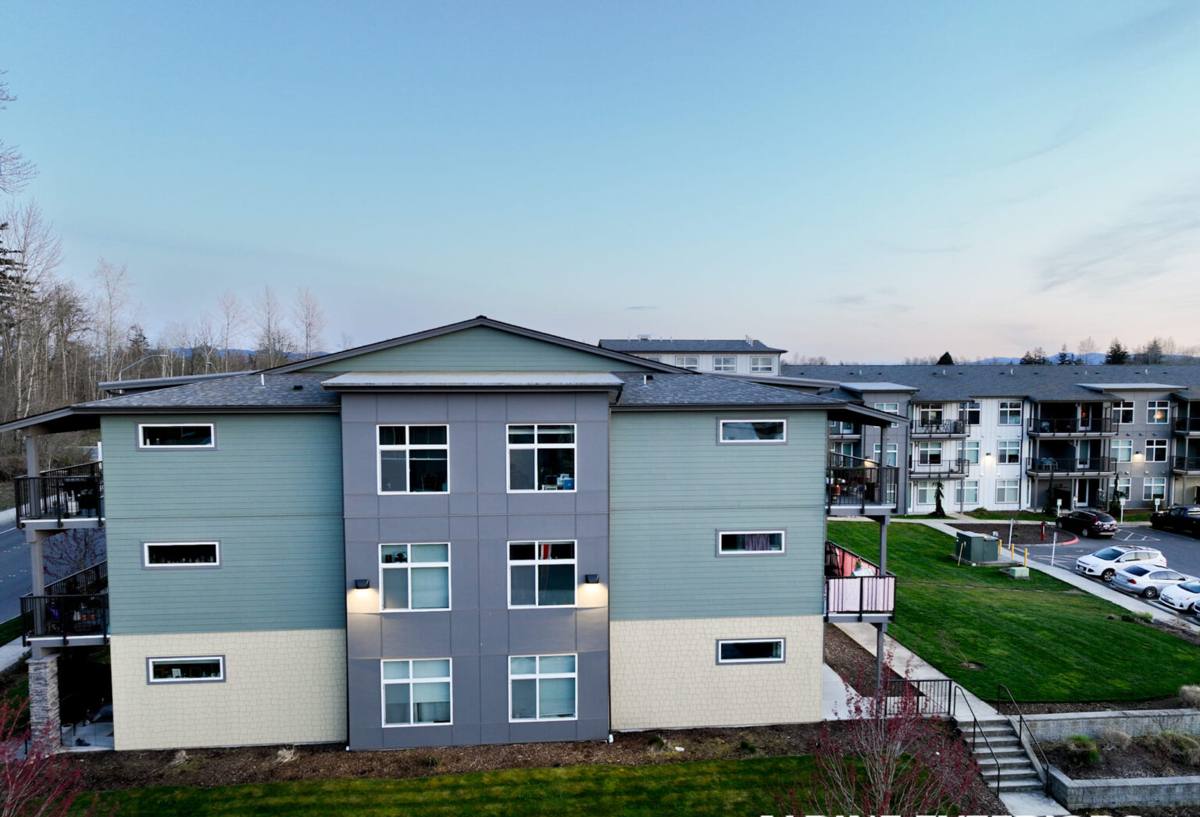
What Salt Air, Rain, and Moss Actually Do to Siding
Each of these three factors stresses siding in a different way, and in Ship Harbor a house deals with all three at once.
Salt air
Airborne salt is corrosive to fasteners and hardware, and it accelerates the breakdown of finishes that aren't formulated to resist it. Paint film on wood or composite siding chalks and fades faster near open water than it does even a few miles inland. Salt also holds moisture against a surface longer than plain rain does, which matters for any material that swells, cups, or rots when it stays wet.
Driving rain
Skagit County storms don't just fall straight down — wind off the strait pushes rain sideways into wall assemblies, seams, and any gap in flashing or caulking. A siding system that only performs under calm, vertical rainfall is the wrong choice for a shoreline lot. What matters here is how the product and the installation detailing behave when water is actively being forced at the wall, not just resting on it.
Moss and algae season
Shaded, north-facing walls in this climate stay damp for long stretches of the fall, winter, and spring. Moss and algae take hold on surfaces that hold moisture or have any texture for spores to grip. Left alone, that growth traps water against the siding surface, which is a slow but steady path to material breakdown underneath a finish, especially on wood-based products.
Why We Install Only James Hardie Fiber Cement
We made a decision as a company to install James Hardie fiber cement exclusively — not vinyl, not LP SmartSide, not primed wood, not other fiber cement brands. That's not a marketing position, it's a practical one built on what actually performs in Pacific Northwest coastal conditions.
Fiber cement is made from cement, sand, and cellulose fibers. It doesn't have the wood content that makes engineered wood siding vulnerable to moisture-driven swelling and edge deterioration, and it doesn't have the thermal expansion and impact sensitivity that limits vinyl in a climate with real temperature swings and storm debris. It's also non-combustible, which matters increasingly across Washington as insurers and building codes pay closer attention to exterior wildfire and ignition ratings.
James Hardie specifically engineers its siding for regional climate zones, backs it with a factory-applied finish system, and stands behind it with a real transferable warranty. We'll get into the specifics below, but the short version is: in a place like Ship Harbor, the margin for error on siding choice is small, and Hardie gives us the most consistent, well-documented way to close that margin.
The Right Hardie Product Line for a Marine Environment
James Hardie builds its siding in different formulations (HZ5, HZ10, and others) engineered for specific climate zones, and Western Washington's marine exposure calls for the cold- and moisture-resistant HZ5 line. That distinction matters more in Ship Harbor than it does further inland — this is exactly the kind of exposure the HZ5 engineering is built around.
On top of the substrate, ColorPlus factory finish is the piece that does the most work against salt air and UV. It's a baked-on, multi-coat finish applied in a controlled factory environment rather than painted on site, which gives it more even coverage and stronger fade resistance than field-applied paint. For a wall that's going to spend years absorbing salt spray and coastal sun, that finish consistency is not a cosmetic upgrade — it's the difference between a paint job you'll be redoing in under a decade and a finish backed by its own warranty.
Board profiles that make sense for this area
- Lap siding — the standard workhorse profile; correctly lapped and fastened, it sheds driving rain well and is the most common choice for full re-sides in this area.
- Shingle-style panels — a common look on Fidalgo Island homes wanting a coastal or craftsman feel, still built on the same fiber cement substrate.
- Trim and soffit systems — matched Hardie trim closes out the weak points (corners, window returns, fascia) where water intrusion actually starts.
What a Correct Installation Actually Involves
Fiber cement siding is only as good as the wall assembly behind it and the details around it. Most siding failures we get called out to inspect — on any brand — trace back to installation shortcuts, not the material itself. In a high-exposure location like Ship Harbor, those shortcuts show up faster.
| Step | Why it matters here |
|---|---|
| Weather-resistant barrier (housewrap) installed and lapped correctly | Second line of defense when wind-driven rain gets past the siding surface |
| Rainscreen / drainage gap behind the siding | Lets any moisture that does get behind the boards dry out instead of sitting against sheathing — important in a climate with limited dry stretches |
| Flashing at windows, doors, and all penetrations | These are the most common failure points on any home; salt air accelerates corrosion on poorly protected metal |
| Correct fastener type and spacing | Hot-dipped galvanized or stainless fasteners resist salt-air corrosion; incorrect fasteners are a leading cause of premature siding failure near water |
| Manufacturer-specified gaps and caulking at joints | Fiber cement needs room to move seasonally; sealed-tight joints without expansion room crack and let water in |
| Factory-cut and factory-primed edges kept intact | Field-cut edges need proper sealing per Hardie spec or they become moisture entry points |
None of this is exotic. It's the difference between "siding installed" and "siding installed to spec" — and on a shoreline lot, that gap is what determines whether you're dealing with trapped moisture and rot behind the wall in ten years or not.
How Our Process Works on a Ship Harbor Home
- On-site assessment. We look at exposure direction, existing wall condition, moisture staining, and any moss or algae growth pattern before quoting anything — a north wall facing the water gets treated differently than a sheltered south wall.
- Tear-off and substrate check. Removing the old siding is when we find out what's actually happening underneath — soft sheathing, old moisture damage, or missing weather barrier get addressed before anything new goes up, not covered over.
- Weather barrier and drainage plane installation. This is the step that gets skipped on rushed jobs and is non-negotiable on ours, especially this close to the water.
- Hardie board installation to manufacturer spec. Correct fastener schedule, correct gapping, correct flashing integration at every window, door, and penetration.
- Trim, caulking, and final detailing. The finish-out work is where a job either sheds water cleanly for the next 30 years or starts failing at the seams in five.
- Final walkthrough. We go over what was done, what the warranty covers, and what basic upkeep looks like for your specific exposure.
Fiber Cement vs. Other Siding Options in This Climate
Homeowners in Ship Harbor often ask how James Hardie fiber cement stacks up against the alternatives they've seen elsewhere. Here's an honest comparison focused on the factors that actually matter in a marine environment — not marketing claims.
| Factor | James Hardie Fiber Cement | Vinyl | Engineered Wood (e.g. LP SmartSide) |
|---|---|---|---|
| Moisture/rot resistance | Not wood-based; engineered for climate zone | Doesn't rot, but seams and expansion gaps can let water track behind it | Wood-based; vulnerable at cut edges and joints if moisture gets in |
| Salt air / coastal durability | Factory ColorPlus finish resists fading and chalking | Can become brittle and discolor faster under UV and salt exposure over time | Finish maintenance burden is higher in salt-air exposure |
| Fire resistance | Non-combustible | Combustible, can melt/deform in heat | Combustible |
| Long-term maintenance | Minimal; occasional wash-down | Low, but cracks/warps from impact are common repair calls | Higher; edges and seams need monitoring and re-sealing |
| Warranty structure | Strong, transferable manufacturer warranty on both substrate and finish | Varies widely by manufacturer and thickness | Warranty often more sensitive to installation and maintenance compliance |
We don't install vinyl or engineered wood siding, so this isn't us steering you away from a competitor's product out of self-interest — it's the reasoning behind why we standardized on one material for every home we side, including our own.
Maintenance in a Marine Climate
Correctly installed Hardie siding is low-maintenance, not no-maintenance. In a location like Ship Harbor, a little seasonal attention goes a long way:
- Rinse salt residue off the siding a couple of times a year, especially on walls facing open water or exposed to prevailing wind.
- Keep an eye on north- and west-facing walls for moss or algae buildup and clean it gently before it establishes — a soft wash is enough; pressure washing directly into joints can force water where it shouldn't go.
- Trim back vegetation and landscaping that shades walls and keeps them from drying out between rain events.
- Check caulking at trim joints, window returns, and penetrations every couple of years and have any cracked sealant redone before it becomes a moisture path.
- Watch for paint chalking or fading as an early sign a finish needs attention — with ColorPlus, this typically shows up far later than with field-painted siding.
Why Hiring a Crew That Already Works Ship Harbor Matters
Siding installation instructions read the same everywhere in the manufacturer's manual. What differs is judgment on site — where to add extra flashing, which wall needs a wider drainage gap, how a specific lot's wind exposure should change the detailing around windows and corners. A crew that's already done work in this specific stretch of Anacortes has seen how these homes actually weather, not just how a spec sheet says they should.
That local pattern recognition is also what keeps a project from turning into guesswork. We know what moss growth on a Ship Harbor wall typically indicates before we even get up on a ladder, and we know which trouble spots on older Fidalgo Island homes tend to hide moisture damage. That's the kind of knowledge that doesn't show up in a product brochure — it comes from doing this work, in this exact climate, over and over.
What This Means for Your Home
If your Ship Harbor home has siding that's chalking, showing moss staining that keeps coming back, or is simply old enough that you're wondering what's happening behind it, the honest answer is usually that the material and the installation details both matter — and in this location, neither one can be an afterthought. James Hardie fiber cement, installed with the drainage, flashing, and fastening detail this exposure actually requires, is what we put on homes here because we've seen what does and doesn't last two blocks from the water.
If you'd like a straightforward look at your home's siding and an honest read on what it needs, we're happy to come take a look. There's no pressure and no obligation — just a clear assessment and a real estimate, using the form below.