 Anacortes Siding
 Roofing on the Ship Harbor Side of Fidalgo Island
Homes near Ship Harbor sit close to the water, which means they take a different kind of beating than a roof a few miles inland. Salt-laden air off Rosario Strait works on exposed metal and fastener heads year-round. Driving rain off the water finds its way into any flashing detail that isn't done right. And the long, damp Skagit County winters give moss and algae months at a time to get established on north-facing slopes and shaded valleys. A roof replacement out here isn't just "put new shingles on" — it's a decision about materials, ventilation, and detailing that has to account for what this specific stretch of coastline does to a roof over twenty, thirty, or forty years.
This page covers what we look at, what we recommend, and how we run a roof replacement for homes in and around Ship Harbor specifically — not a generic overview of roofing in general.
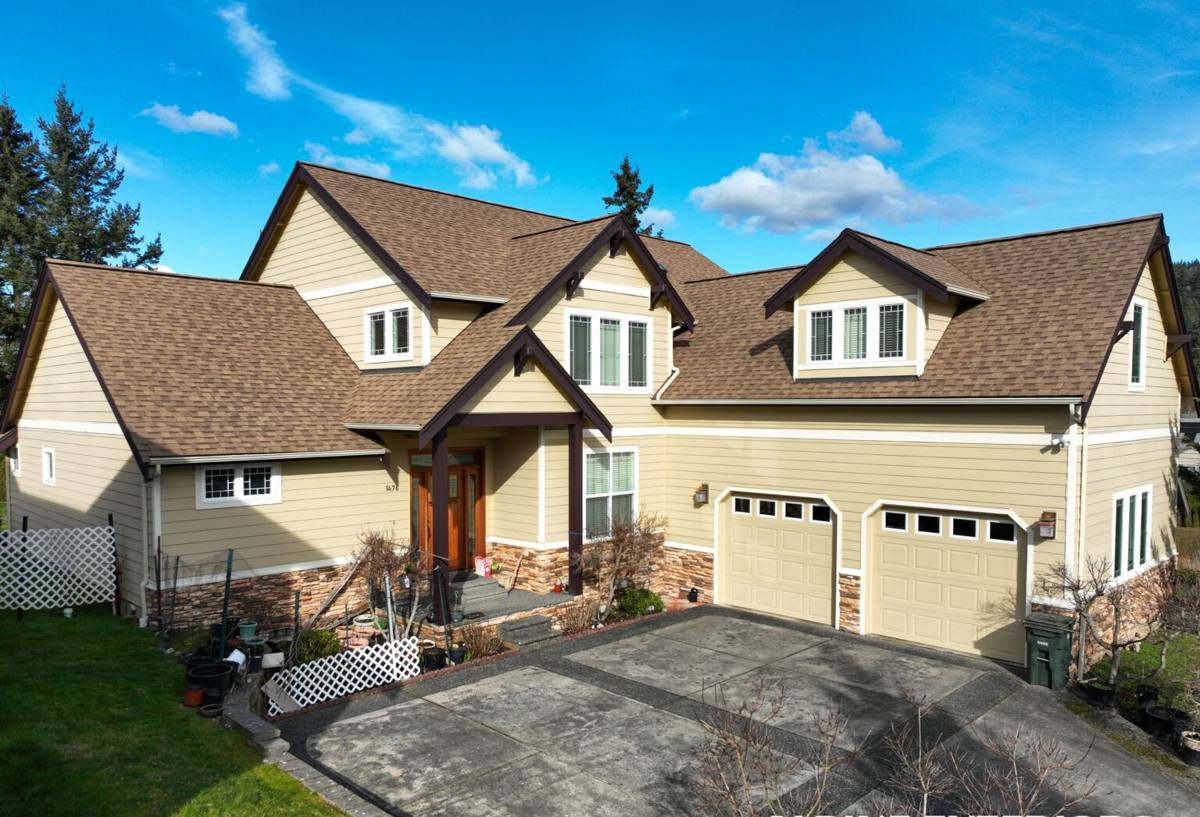
Signs a Ship Harbor Roof Needs Replacement, Not Just Repair
Repair makes sense when the problem is localized — a cracked boot, a lifted ridge cap, a section of flashing that failed. Replacement becomes the honest answer when the damage is spread across the roof or built into its age. Things we look for during an inspection:
- Granule loss heavy enough that you can see bare asphalt mat on multiple slopes, not just one worn spot
- Shingles that are cupping, curling, or cracking across large areas rather than isolated tabs
- Moss or algae mats thick enough that they're lifting shingle edges and holding moisture against the roof deck
- Soft or spongy decking felt underfoot, or daylight visible through the sheathing from the attic
- Repeated leaks in different spots each winter, which usually means the underlayment has failed generally, not just at one point
- A roof that's already had two or more patch repairs and is approaching or past its expected material lifespan
If a roof is showing two or more of these at once, patching tends to become a cycle of chasing leaks rather than solving the underlying problem. That's the point where a full replacement is usually the more cost-effective path.
Materials That Actually Hold Up Near the Water
Not every roofing product performs the same way this close to Ship Harbor. Salt air accelerates corrosion on unprotected metal, and constant moisture exposure punishes anything that relies on a wood substrate to stay dry. Here's how the common options compare for this specific environment:
| Material | Coastal/moisture performance | Maintenance in Ship Harbor conditions |
|---|---|---|
| Architectural asphalt shingle | Good, with the right underlayment and flashing; algae-resistant granule options help with moss/algae staining | Periodic moss removal and gutter clearing; moderate |
| Standing seam metal | Very good when fasteners and coatings are marine-rated; sheds water and moss fast due to slope and slick surface | Low; occasional rinse, inspect fastener seals |
| Cedar shake | Attractive but absorbs and holds moisture, which is a real liability in a wet, salt-air climate | High; regular treatment, more vulnerable to moss and rot over time |
| Composition/laminate low-slope membrane | Good for porch roofs and additions with minimal pitch, if seams are properly sealed | Low to moderate; seam inspection over time |
We don't install cedar shake as a rule, not because it can't look good, but because the maintenance burden and moisture risk in this climate is higher than most homeowners want to sign up for. For most Ship Harbor homes, we steer people toward algae-resistant architectural asphalt or standing seam metal, chosen based on roof pitch, budget, and how much upkeep the homeowner actually wants to do.
What a Correct Roof Replacement Actually Involves
A roof replacement is more than swapping the top layer. The parts that don't show are what determine whether the roof performs for the next few decades or starts leaking in year six.
Tear-off and deck inspection
We remove existing roofing down to the deck rather than layering over old material. That's the only way to actually see the sheathing — soft spots, rot, or old leak staining get found and fixed before anything new goes down. Roofing over a compromised deck just hides the problem under a new layer of shingles.
Underlayment built for wet climates
A synthetic underlayment across the full roof, with self-adhered ice-and-water shield at eaves, valleys, and around every penetration, is standard practice here — not an upgrade. Given how much wind-driven rain this area sees off the water, this layer is doing real work, not just serving as a formality between the deck and shingles.
Flashing at every transition
Chimneys, skylights, sidewall intersections, and valleys are where the large majority of roof leaks actually start. Properly stepped and counter-flashed details, with new material rather than reused old flashing, matter more to long-term dryness than the shingle brand.
Ventilation that matches the home
Balanced intake and exhaust ventilation keeps the attic dry and the roof deck at a stable temperature, which protects both the shingles from the underside and the structure from trapped moisture. We size and place vents based on the specific roof, not a one-size-fits-all rule.
Our Roof Replacement Process
We run every job the same structured way, whether it's a straightforward gable roof or something with more complex rooflines:
- On-site inspection and estimate — we walk the roof (or use appropriate access for steep pitches), check the attic, and give you a written scope and price, not a verbal ballpark
- Material selection — we go over the options above in the context of your budget, roof pitch, and how the home is exposed to wind and rain
- Tear-off and deck repair — old roofing removed, deck inspected, any damaged sheathing replaced before anything new goes on
- Underlayment and flashing installation — the moisture-management layer that does the real work over the life of the roof
- Roofing installation — installed to manufacturer specifications, which is also what keeps the material warranty valid
- Ventilation and detail work — vents, boots, ridge caps, and trim finished out
- Final walkthrough and cleanup — magnetic sweep for nails, debris hauled off, and a walkthrough so you know exactly what was done
Moss, Algae, and What Actually Slows Them Down
Given how many months out of the year this area stays damp and shaded on north- and east-facing slopes, moss isn't an if, it's a when — but the rate at which it takes hold depends on a few things we can control at installation:
- Algae-resistant shingle granules (usually copper- or zinc-infused) slow biological growth measurably compared to standard granules
- Proper attic ventilation keeps the roof deck from staying cold and damp, which is one of the conditions moss favors
- Keeping tree limbs back from the roofline reduces shade and debris buildup, both of which accelerate moss colonization
- Clean, properly pitched valleys and gutters prevent standing water and organic debris from collecting against the roofing material
None of this makes a roof moss-proof — nothing does, this close to the water and under this much tree cover across Skagit County. But it's the difference between light surface growth that a homeowner can manage with occasional cleaning, and thick mats that lift shingles and shorten the roof's life.
What to Ask Before Hiring a Roofing Contractor Here
Because a bad roof replacement can be worse than an old roof left alone, it's worth vetting carefully. Before signing anything, confirm:
- Are you licensed and insured to work in Washington, and can you provide proof directly?
- Is the estimate written and itemized, or just a verbal number?
- Does the quote specify underlayment type, flashing approach, and ventilation plan — or just "new roof"?
- Who pulls the permit, and is that included in the price?
- What's covered under workmanship warranty, separate from the manufacturer's material warranty?
- Will the old roofing and debris be hauled off as part of the job?
A contractor who answers these clearly and in writing, without hesitation, is usually the one worth hiring.
Why Local Experience in Ship Harbor Matters
A roofing crew that mostly works drier, inland areas doesn't always think about wind-driven rain the same way a crew that works this stretch of Anacortes coastline does. Knowing which slopes on a given lot see the worst weather off the water, which details tend to fail first in this climate, and how aggressively moss actually grows on a shaded north slope here versus a sunnier inland roof — that comes from doing this work locally, repeatedly, not from a general roofing background. We build every replacement around what actually holds up in Skagit County's marine climate, not a generic spec sheet.
If your roof is showing wear, or you just want an honest read on how much life it has left, we're happy to take a look. Reach out for a free, no-pressure estimate — someone will come inspect the roof, answer your questions, and give you a straight assessment, whether that means repair or replacement.