 Anacortes Siding
 Ship Harbor's Climate Is Harder on Siding Than Most of Anacortes Realizes
Ship Harbor sits right up against the water on Fidalgo Island, which means homes here take a steadier dose of marine weather than houses just a few miles inland in Anacortes. Salt-laden air moves through constantly, wind-driven rain hits siding at angles that flat-on-flat installations were never designed to handle, and the shaded, damp stretches of the year give moss and algae a long runway to establish themselves on north-facing walls and anywhere tree cover blocks the sun. None of this is exotic — it's just the normal cost of living on the water in Skagit County. But it means siding decisions that work fine in a drier part of the state don't hold up the same way here.
The practical result: siding on Ship Harbor homes is exposed to more moisture cycling, more salt exposure, and more sustained dampness than the statewide average. That doesn't mean every product fails — it means installation quality and material choice matter more here than they do somewhere with less weather to contend with.
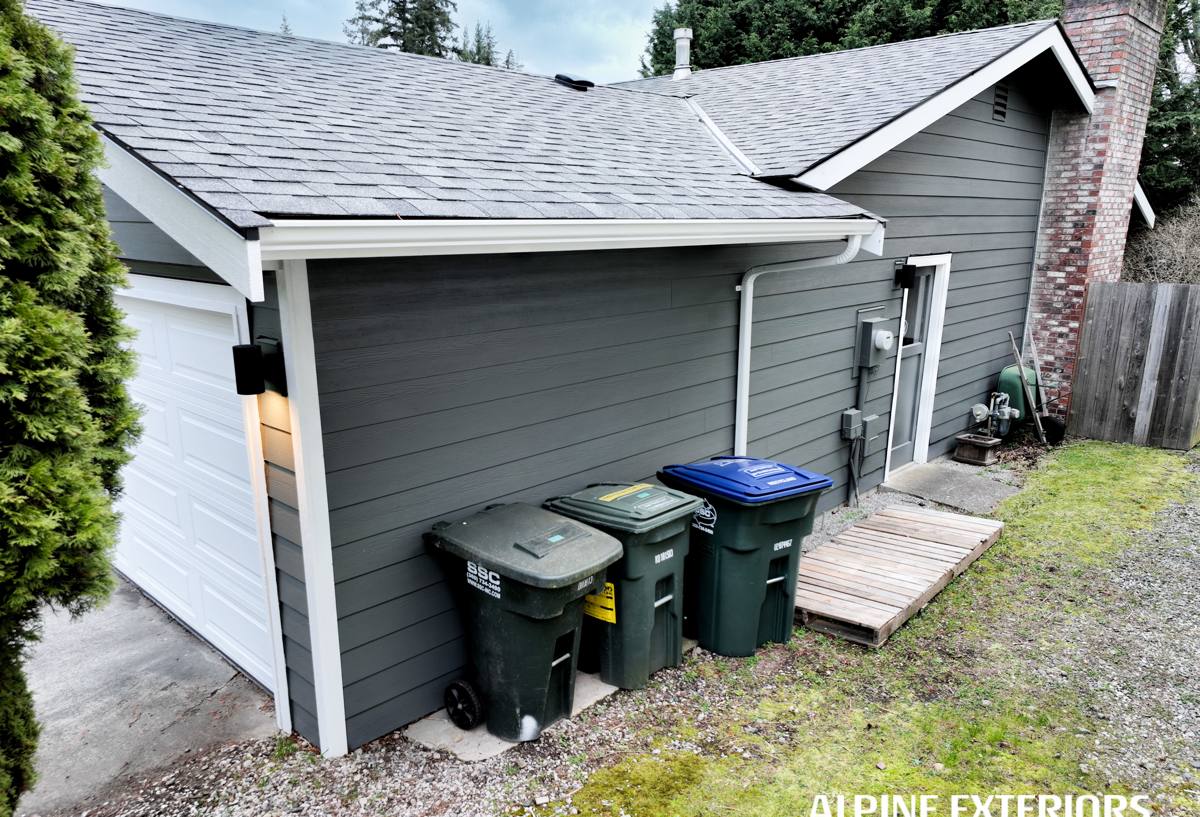
What "Correct" Siding Installation Actually Means in a Marine Environment
Siding installation is often talked about like it's just cutting boards and nailing them up. In a waterfront environment, the parts nobody sees are what determine whether the job lasts fifteen years or thirty-five. A correct install in Ship Harbor conditions includes:
- A continuous weather-resistant barrier behind the siding, lapped correctly so water sheds outward instead of tracking behind the cladding.
- Properly flashed windows, doors, and penetrations — every hose bib, vent, and light fixture is a potential entry point if flashing is skipped or rushed.
- Correct fastener spacing and type — corrosion-resistant fasteners matter more near salt air, where standard hardware can degrade faster.
- Proper clearance at the bottom edge — siding held up off decks, patios, and grade so splash-back and standing moisture don't sit against the board.
- Rainscreen or drainage gap detailing where the wall assembly calls for it, so any moisture that does get behind the siding has somewhere to go.
Skip any one of these and the siding itself becomes almost irrelevant — water finds the gap. This is why we treat installation detailing as at least as important as the product brand on the label.
Why This Matters More on a Ship Harbor Lot Than an Inland One
A house set back from the water in a sheltered Anacortes neighborhood might tolerate a minor flashing shortcut for years before it shows. A Ship Harbor home facing open water doesn't get that grace period — wind-driven rain finds weak details faster, and the moss season is long enough that any spot holding moisture becomes a growth site within a season or two, not years.
Why We Install Only James Hardie Fiber Cement
We've made a deliberate choice not to install vinyl, LP SmartSide, or other fiber-cement brands, even though all of them have a place in the broader market. For a waterfront property in Skagit County, the trade-offs stop making sense for us:
- Vinyl expands and contracts more with temperature swings and can become brittle over time; in high-wind coastal exposure, that flexibility works against long-term fit and fastening.
- Engineered wood products like LP SmartSide perform well in many climates but rely on an intact factory treatment and careful field sealing of every cut edge — a single missed edge in a damp environment is a maintenance liability we don't want to sign our name to.
- Other fiber cement brands may be dimensionally similar to Hardie, but we standardized on one product line so our crews master its installation specifics rather than switching systems from job to job.
James Hardie fiber cement is non-combustible, doesn't absorb moisture the way wood-based products can, and its ColorPlus factory finish is baked on rather than field-applied — which matters in an environment where UV, salt, and moisture all work on a painted surface simultaneously. Hardie also engineers specific product lines (HZ5, HZ10) for different climate zones, so we're not installing a generic product and hoping it holds up — we're matching the product spec to the exposure.
How We Approach a Ship Harbor Siding Installation
1. On-Site Assessment
Before any material gets ordered, we walk the exterior and look at exposure by wall — which sides take the brunt of the weather off the water, where moss and algae are already established, where old caulk or trim is failing, and whether the existing water-resistive barrier and flashing are salvageable or need to be replaced along with the siding.
2. Tear-Off and Substrate Check
Once old siding comes off, we inspect the sheathing underneath for rot or soft spots — this is the point where hidden moisture damage from a prior installation often shows up, and it's far cheaper to address now than after new siding is on.
3. Weather Barrier and Flashing
We install a continuous weather-resistive barrier and properly integrated flashing at every window, door, and penetration, lapped so water is directed outward and down, never inward.
4. Hardie Installation to Manufacturer Spec
Panels and planks go up per James Hardie's published installation guidelines — fastener spacing, joint treatment, and clearances — because those specs are what keep the transferable warranty intact and what actually determines long-term performance.
5. Final Detailing and Walkthrough
Trim, caulking at appropriate joints (not as a substitute for flashing), and a final walkthrough so the homeowner understands what was done and what routine maintenance looks like going forward.
Cost Factors for a Ship Harbor Siding Job
Every home is different, but the same handful of factors drive cost up or down on most waterfront-exposure jobs:
| Factor | Why It Matters Here |
|---|---|
| Extent of substrate damage found at tear-off | Water-exposed homes near the shoreline more often have hidden sheathing or framing repair needed before new siding goes on |
| Number of window, door, and utility penetrations | Each one needs individual flashing detail — more penetrations means more labor, not just more material |
| Wall exposure to prevailing wind and rain | Water-facing walls may warrant upgraded flashing or drainage detailing beyond the minimum code requirement |
| Existing moss/algae growth and staining | Heavier growth can mean more prep work and sometimes indicates a moisture issue worth investigating before covering it up |
| Trim and accessory scope | Fascia, soffit, and trim replacement alongside siding affects both material and labor cost |
Signs a Ship Harbor Home Needs Siding Attention Soon
- Persistent moss or dark streaking on north-facing or shaded walls that returns quickly after cleaning
- Soft spots, bubbling, or visible warping in existing siding, especially near ground level or under windows
- Caulk that's cracked, shrunk, or pulling away at trim and window edges
- Peeling or chalking paint that keeps recurring within a year or two of repainting
- Visible gaps or fastener pops where panels have started to separate from the wall
- Interior signs — musty smell, staining, or soft drywall near exterior walls — that suggest moisture is already getting through
Why Local Experience in Ship Harbor Specifically Matters
A crew that's worked waterfront exposure on Fidalgo Island knows which walls typically need extra flashing attention before they even get a ladder up, and they've already seen how moss establishes itself in this specific microclimate versus a drier part of Skagit County. That's not a marketing point — it changes how a bid gets scoped and where attention goes during the tear-off. A contractor who mostly works inland, drier neighborhoods may not budget the same care into penetration flashing or drainage detailing, because they haven't had to deal with the consequences of skipping it.
Maintenance After Installation
Correctly installed Hardie siding is low-maintenance, not no-maintenance. In a marine environment like Ship Harbor, a simple annual routine goes a long way:
- Rinse siding annually to remove salt residue and slow moss/algae buildup, especially on shaded walls
- Inspect caulking at trim and penetrations yearly and re-caulk where it's cracked or gapped
- Keep gutters clear so overflow doesn't run down and sit against siding
- Trim back vegetation that shades walls and traps moisture against the house
None of this is heavy labor, but skipping it for years in a wet, salty climate is how small issues turn into bigger ones.
Warranty and What It Actually Covers
James Hardie backs its products with a transferable limited warranty, and ColorPlus finishes carry their own finish warranty separate from the product warranty. That warranty is contingent on installation to Hardie's published specifications — which is another reason we don't cut corners on flashing, fastening, and clearance details. An installation shortcut that isn't visible on move-in day can be exactly the thing that voids coverage years later when it matters.
If you're weighing a siding project on a Ship Harbor property, we're happy to walk the exterior with you, point out what we're seeing wall by wall, and put together a straightforward, no-pressure estimate — just fill out the form below to get started.