 Anacortes Siding
 Cap Sante's Waterfront Setting Puts Extra Demands on Siding
Homes near Cap Sante sit close enough to Guemes Channel and the Fidalgo Bay shoreline that the exterior envelope works harder than it would a few miles inland. Salt-laden air moves through the neighborhood on a regular basis, prevailing wind off the water drives rain sideways into wall assemblies, and the tree cover common to this part of Anacortes keeps north- and west-facing walls shaded and damp for long stretches of the year. None of this is unusual for Skagit County's marine climate, but it does mean siding installed here needs to be chosen and installed with that exposure in mind, not treated the same as a job on a dry inland lot.
A siding installation that looks fine on day one but wasn't detailed for this environment tends to show problems within a few years: swelling at butt joints, paint failure on end grain, moss colonies on shaded courses, and soft spots where water has been sitting against the wall longer than the material can tolerate. Getting it right the first time matters more here than in a lot of other parts of the state.
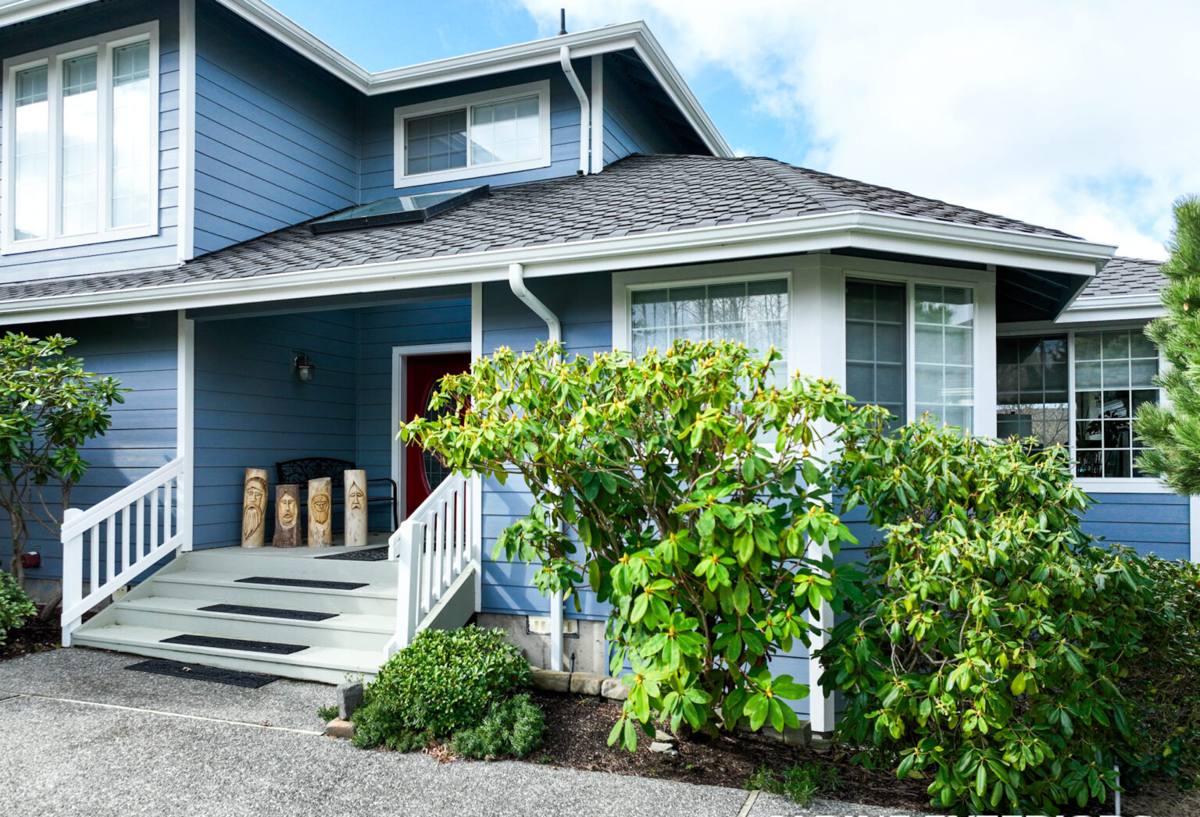
What Salt Air and Driving Rain Do to Exterior Walls Over Time
Salt air is corrosive to exposed metal fasteners and trim, and it accelerates the breakdown of coatings that aren't formulated to resist it. Combined with wind-driven rain, water gets pushed into places a calmer climate would never test — under laps, around window and door casing, and into any gap where flashing was skipped or installed short.
The failure points we see most often on waterfront-adjacent homes
- Fastener corrosion and staining where the wrong nail or screw type was used near the water
- Paint and coating breakdown on siding not rated for high-UV, high-salt exposure
- Water intrusion at butt joints and corners where sealant was used in place of proper flashing
- Soft, swollen, or delaminated siding on walls that take the brunt of the wind
- Moss and algae staining on shaded, poorly ventilated wall sections
The fix isn't a thicker coat of paint every few years — it's choosing a siding material that's dimensionally stable and non-absorbent, and installing it with flashing and fastening details built for this exposure.
Moss Season Is Longer Here Than Most Homeowners Realize
Anacortes gets a genuine dry season in summer, but the wet months stretch long, and shaded walls under mature trees near Cap Sante can stay damp for weeks at a time. Wood-based sidings — cedar, primed spruce, and similar products — are especially vulnerable here because they're organic material to begin with. Moss and algae don't just sit on the surface; given enough time and moisture they hold water against the substrate and accelerate rot from behind the finish.
Fiber cement doesn't feed mold and moss the way wood does, but it isn't immune to surface growth either. What keeps moss from becoming a structural problem, regardless of siding material, is a combination of proper drainage behind the cladding, adequate ventilation gaps where the design calls for them, and periodic gentle cleaning — not pressure washing, which can drive water into laps and joints.
Comparing how common siding materials handle Cap Sante's climate
| Material | Moisture Behavior | Salt Air / UV Durability | Long-Term Maintenance |
|---|---|---|---|
| Cedar / primed spruce | Absorbs moisture, swells and shrinks seasonally | Finish breaks down faster near salt air | Regular refinishing and moss treatment required |
| Vinyl | Doesn't rot, but can warp and gap at seams | Fades and becomes brittle under sustained UV/salt | Low, but limited repair options once damaged |
| Engineered wood (LP-type) | Vulnerable at cut edges and joints if moisture gets in | Moderate; performance depends heavily on install detail | Ongoing edge sealing and inspection needed |
| James Hardie fiber cement | Non-combustible, dimensionally stable, resists swelling | Factory ColorPlus finish engineered for UV and coastal exposure | Low; occasional gentle wash, no refinishing cycle |
What a Correct Siding Installation Actually Involves
Siding is only as good as the assembly behind it. A correct installation in a marine climate like this one is less about the visible lap lines and more about what happens underneath them.
The details that make the difference on a Cap Sante home
- A code-compliant weather-resistive barrier installed with proper shingle-lap sequencing, not just stapled up flat
- Flashing at every window, door, and horizontal trim transition — not sealant used as a substitute for flashing
- Correct fastener type, length, and spacing for the specific siding profile and wall assembly
- Rain-screen or drainage gap detailing where the wall design calls for it, so water can escape rather than pool
- Manufacturer-specified clearances at grade, roof lines, and decks so siding isn't sitting in standing water or debris
- Caulking and sealant limited to the joints designed for it, using products rated for exterior, coastal exposure
Skip any one of these and the siding itself becomes almost irrelevant — water will find the gap, and no amount of premium material fixes a flashing mistake.
Why We Install Only James Hardie Fiber Cement
We install James Hardie siding exclusively, and Cap Sante's climate is a good example of why. Hardie's fiber cement is non-combustible, doesn't swell or rot the way wood-based products can, and the ColorPlus factory finish is engineered to hold up under sustained UV and moisture exposure without the repainting cycle that wood siding demands. Hardie also builds specific HZ5 product lines for wetter, harsher climates, which fits the Pacific Northwest better than a one-size-fits-all product.
We don't install vinyl, LP SmartSide, Cemplank, Allura, primed spruce, or cedar. Each of those has legitimate strengths, but on a home taking the kind of salt air and driving rain that Cap Sante sees, they carry trade-offs — moisture sensitivity, edge vulnerability, coating longevity, or ongoing maintenance — that we're not willing to put our name behind. Hardie's combination of durability, factory-applied finish, and a strong transferable warranty is what we've standardized on for every home we side, in this neighborhood and everywhere else we work in Skagit County.
What comes with a Hardie installation on this job
- Fiber cement panels and lap siding manufactured for climate-specific performance
- Factory-applied ColorPlus finish, reducing on-site painting and future touch-up work
- Manufacturer warranty coverage that's designed to transfer with proper installation documentation
- Trim, corner, and fastening components matched to the Hardie system rather than mixed with incompatible parts
Our Process for a Cap Sante Siding Installation
Every home is different, but the sequence stays consistent because it's built around getting the water management right before a single piece of visible siding goes up.
- On-site assessment — we walk the exterior, check existing siding and sheathing condition, note wind exposure and shaded/damp areas specific to the lot
- Tear-off and substrate check — old siding comes off, sheathing is inspected for hidden rot or water damage before anything new goes on
- Weather barrier and flashing — house wrap and flashing installed at every penetration and transition, sequenced so water always sheds outward and down
- Hardie installation — panels and trim installed to manufacturer fastening and clearance specifications
- Final detailing — caulking limited to designed joints, touch-up where needed, site cleanup
- Walkthrough — we go over the finished work and warranty documentation with the homeowner
Cost Factors for Siding Installation in Cap Sante
Every project is quoted after we've seen the home, but a few factors consistently move the price on jobs in this area more than a general estimate would suggest.
| Factor | Why It Matters Here |
|---|---|
| Substrate condition | Homes with prior moisture intrusion often need sheathing repair before new siding goes on |
| Wall exposure | Waterfront-facing walls may need additional flashing detail versus sheltered elevations |
| Trim and architectural detail | Cap Sante's older and custom homes often have more corners, trim, and transitions than a standard box |
| Access | Sloped lots and mature landscaping near the water can affect staging and scaffolding needs |
| Siding profile | Lap, panel, and shingle-style Hardie products carry different material and labor costs |
Why Local Experience in Cap Sante Matters
A crew that already works this neighborhood knows which walls take the worst of the weather, where moss tends to build up first, and how the local wind pattern off the water actually behaves versus how it looks on paper. That knowledge shows up in small decisions — where to add extra flashing, which elevation needs a closer look at the drainage plan, how tight to run clearances at grade — that a crew unfamiliar with this specific stretch of Anacortes might miss. Siding installation done right the first time costs less over the life of the home than a job that has to be partially redone once water finds its way in.
If you're planning a siding project on a Cap Sante home, we're happy to take a look and walk you through what your specific home needs. Reach out for a free, no-pressure estimate using the form below.