 Anacortes Siding
 Siding Replacement for Ship Harbor Homes
Ship Harbor sits on the western edge of Fidalgo Island, close enough to Rosario Strait and the ferry terminal that homes here take weather straight off the water. That's a different exposure than a house tucked into a valley on the mainland side of Skagit County. Wind-driven rain, salt-laden air, and long stretches of gray, damp months put real stress on exterior siding, and it shows up as premature paint failure, soft trim boards, and siding that never fully dries out between storms.
We replace siding for homeowners in this part of Anacortes on a regular basis, which means we're not guessing at what holds up here — we're working from what we've already seen fail and what's still performing years later. This page covers what a correct siding replacement looks like specifically for a Ship Harbor property, not a generic answer that could apply anywhere in western Washington.
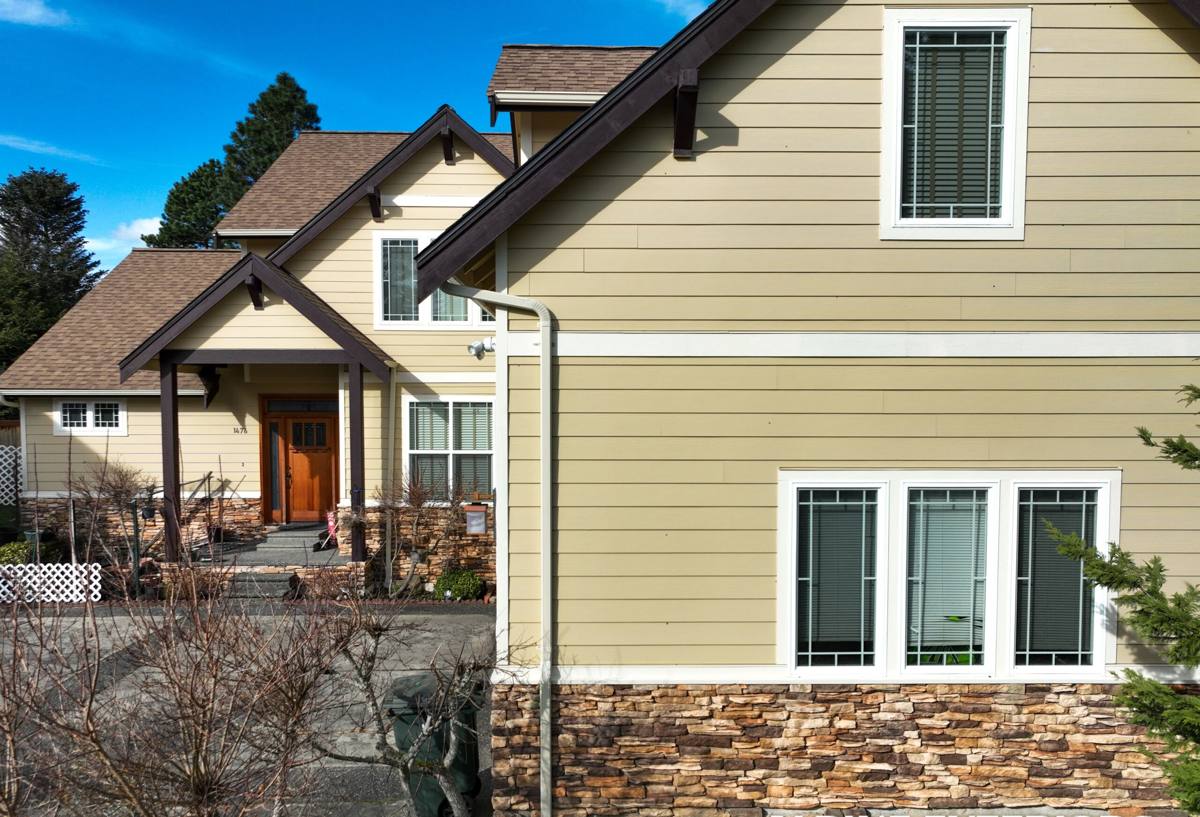
Why This Location Is Harder on Siding Than It Looks
A house a few miles inland can go years without needing much siding attention. A house near Ship Harbor doesn't get that luxury. A few things stack up against the siding here:
- Salt air corrosion: Airborne salt from the strait accelerates the breakdown of fasteners, flashing, and lower-quality trim products, and it eats into paint film faster than inland exposure.
- Driving rain: Wind off the water doesn't just fall — it pushes rain sideways into siding laps, corner boards, and window trim, testing every seam in the system.
- Moss and algae season: Skagit County's long wet season (roughly October through April, with damp mornings well into summer) keeps north- and west-facing walls shaded and moist for months at a time, which is exactly what moss and mildew need to take hold.
- Temperature swings: Cool nights off the water and warmer daytime sun cause siding materials to expand and contract, which over time works loose fasteners and opens hairline gaps in caulked joints.
None of this means siding is doomed near Ship Harbor. It means the material choice and the installation details matter more here than they would somewhere sheltered, and it's why we don't treat every siding job in Anacortes the same way.
What a Correct Siding Replacement Involves
Tear-Off and Sheathing Inspection
Replacement starts with full removal of the old siding, not a re-side over the top of it. That's the only way to actually see the sheathing underneath. In a marine-exposed area like this, we're specifically checking for soft or delaminated sheathing around windows, at wall bottoms, and anywhere the old siding's caulking had already failed — because water doesn't stop at the siding, it keeps going until something stops it.
Weather-Resistive Barrier and Flashing
Behind every new siding job should be a continuous weather-resistive barrier (house wrap) with properly lapped seams, plus flashing at every window, door, and horizontal trim transition. This is the layer that actually keeps a home dry — the siding itself is the first line of defense, but the barrier and flashing behind it are what matter when wind-driven rain gets past the surface, which it will, eventually, on a home this exposed.
Fastening and Clearances
Correct nailing pattern, proper fastener type (we don't use fasteners that will corrode faster than the siding they're holding), and correct gaps at butt joints and corners so the material can expand and contract without buckling. We also make sure siding maintains proper clearance from grade, decks, and roof lines — a common shortcut on older installs that lets moisture wick straight into the bottom courses.
Caulking and Paint System
Factory-finished siding needs far less field caulking and painting than raw wood siding, which is one of the reasons it holds up better in this climate — every bead of field-applied caulk and every hand-painted seam is a future maintenance point and a future failure point.
Why We Only Install James Hardie Fiber Cement
We don't install vinyl, LP SmartSide, primed spruce, cedar, or other fiber cement brands. That's a deliberate standard, not a lack of options, and it matters more in a location like Ship Harbor than almost anywhere else in the region.
| Concern in a Marine-Exposed Area | How James Hardie Addresses It |
|---|---|
| Moisture absorption and swelling | Fiber cement doesn't absorb and swell the way wood-based products can; it holds its shape through wet-dry cycles |
| Fire exposure from wildfire smoke/embers | Non-combustible material, unlike vinyl or wood-based siding |
| Paint and color failure from salt air and UV | ColorPlus factory finish is baked on and warrantied against fading and peeling, rather than relying on field-applied paint |
| Pest and rot vulnerability | Cement-based composition isn't a food source for insects or fungal rot |
| Long-term warranty coverage | Strong transferable manufacturer warranty backing the product itself |
We'll be direct about the trade-offs too: Hardie siding costs more upfront than vinyl, it's heavier and requires proper fastening technique, and it has to be installed to Hardie's specifications to perform as designed — cut corners on installation and you lose the benefit of a good product. That's exactly why installation quality is as much a part of this page as the material itself.
HZ5 vs. Standard Product Lines
James Hardie makes climate-engineered product lines, and for a home exposed to Ship Harbor's weather, that distinction is worth understanding rather than skipping past.
- HZ5 (harsh, wet climate engineering): Formulated for regions with significant moisture exposure and freeze-thaw cycling — a reasonable fit for a home taking direct wind and rain off the strait.
- HZ10 (standard/moderate climate engineering): Built for milder, more sheltered exposure conditions.
We evaluate each home's specific exposure — which direction it faces, how sheltered or open the lot is, how close it sits to the water — before recommending a product line, rather than defaulting to one answer for every address in the 98221 area.
Color and Style Choices That Hold Up Here
Color matters more in a place with heavy moss growth and salt spray, because both show up differently depending on the finish. Darker colors on north- and west-facing walls can make early moss growth less visually obvious but don't stop it; lighter colors show dirt and salt residue faster but make moss and algae easier to spot and address early. ColorPlus finishes are factory-cured, which holds color truer over time than a field-applied paint job would in this much UV and salt exposure. We'll walk through lap style (traditional lap, board-and-batten, shingle-style panels) and color options based on what suits the home and how it sits relative to sun and wind exposure — not just what looks good on a sample board.
Our Process for a Ship Harbor Project
- On-site assessment: We look at current siding condition, sheathing risk areas, sun/wind exposure, and any moisture or moss patterns already visible on the home.
- Written estimate: Scope, product line (HZ5 vs. HZ10), color, and timeline laid out clearly before any work starts.
- Full tear-off: Old siding removed, sheathing inspected and repaired where needed before anything new goes up.
- Barrier and flashing installation: House wrap and flashing detailed at every penetration and transition.
- Hardie installation to spec: Correct fastening, clearances, and joint treatment throughout.
- Final walkthrough: We review the finished job with the homeowner before calling it complete.
Signs a Ship Harbor Home May Need Siding Replacement Soon
- Paint that's peeling, chalking, or fading unevenly, especially on water-facing walls
- Soft or spongy spots when you press on siding or trim near the bottom of walls
- Persistent moss or dark streaking that comes back shortly after cleaning
- Visible gaps, warping, or buckling at siding seams and corners
- Rising energy bills that may point to a compromised weather barrier behind the siding
- Siding that's original to a home built more than 20-25 years ago, especially wood-based products
Why a Local Crew Matters for This Job
Siding installation isn't just about the product — it's about how well the installer understands the site. A crew that regularly works in and around Anacortes and Skagit County knows how much flashing detail a marine-exposed wall actually needs, how local moss patterns behave on north-facing siding, and how permitting and inspection tend to run in this jurisdiction. That local knowledge shows up in the details that don't get noticed until years later, when a poorly flashed window or an under-specified product line starts failing while a correctly installed one doesn't.
If you're weighing a siding replacement for a home near Ship Harbor, we're happy to take a look and give you a straightforward, no-pressure estimate — what your home actually needs, what it would cost, and why. There's a form below to get that started.