 Anacortes Siding
 Why Similk Beach Homes Wear Out Windows Faster
Similk Beach sits close enough to the water that homes there take a different kind of weathering than a house a few miles inland in Anacortes or elsewhere in Skagit County. Salt-laden air moves off Similk Bay and the surrounding shoreline year-round, and that salt doesn't just sit on the glass — it works into hardware, gaskets, and any exposed fastener. Add driving rain that comes sideways off the water during winter storms, and you've got two forces attacking a window from opposite directions: corrosion from the air, and water intrusion from wind-driven rain that a standard installation isn't always sealed against.
Then there's moss season, which in this part of Western Washington runs a good chunk of the year. Moss and algae don't just grow on roofs — they colonize north-facing trim, sills, and any spot on a window assembly that stays damp and shaded. Left alone, that growth holds moisture against wood trim and vinyl seams long after the rain has stopped, which speeds up rot and seal failure in ways a homeowner in a drier climate never has to think about.
None of this means Similk Beach is a bad place to own a home — it means the windows have to be chosen and installed with these three specific stresses in mind: salt exposure, wind-driven rain, and near-constant dampness. A window that performs fine in a subdivision fifteen miles inland can fail early here if it's not detailed for coastal conditions.
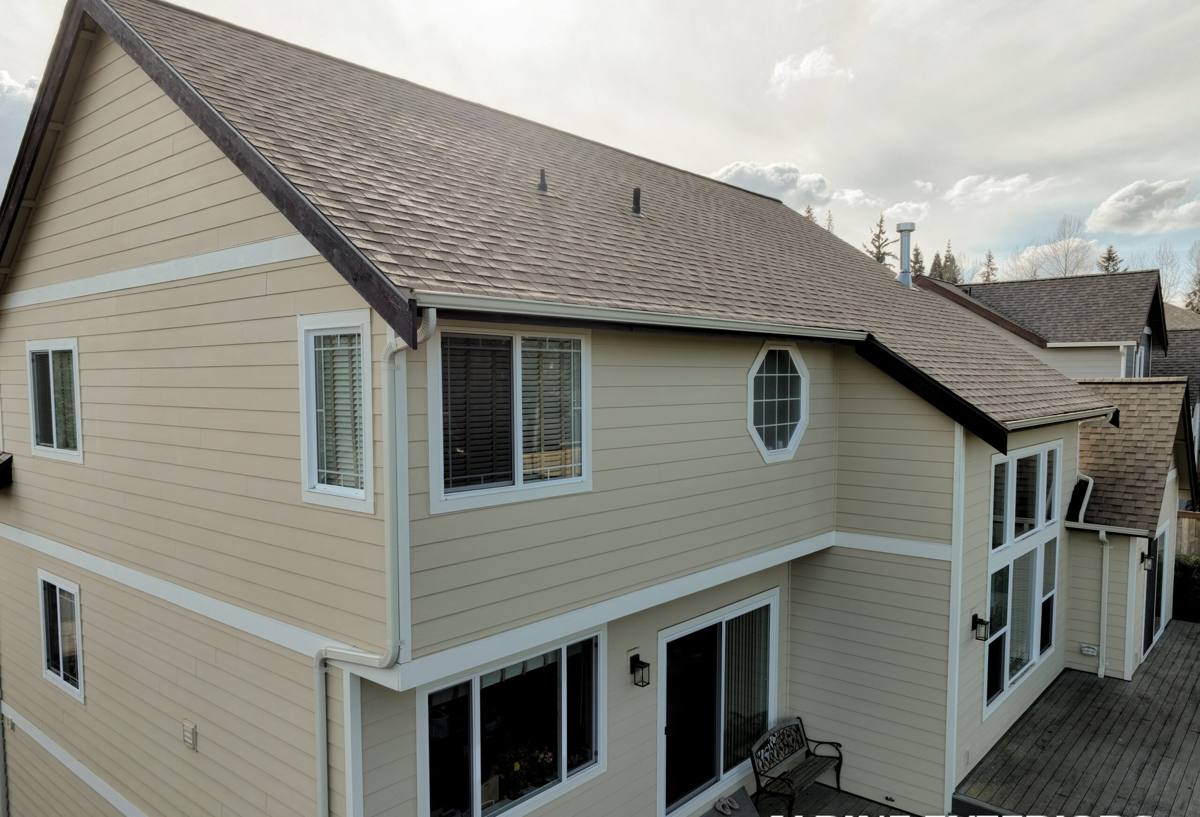
What "Custom" Should Actually Mean
"Custom windows" gets used loosely in this trade, so it's worth being specific about what it means for a Similk Beach project. It's not a marketing word — it's about building the window opening around your actual house instead of forcing a stock size into it.
Exact Sizing, Not Nearest Fit
Older homes near the water — especially ones that have settled, been added onto, or had previous window work done — rarely have perfectly square, standard-sized openings anymore. Custom windows are measured and built to the real opening, not shimmed and gapped to fit a stock size. That precision matters more here than in a dry climate, because every gap is a place water and wind can find a way in.
Matching the Architecture
Custom also means matching grid patterns, sightlines, and trim profiles to the rest of the house, so replacement windows don't look like an obvious retrofit. That's especially relevant on older Fidalgo Island homes with a distinct look worth preserving.
Performance Built for the Exposure
And it means selecting glass, frame material, and hardware based on how much salt air and rain exposure that specific side of the house actually gets — a window facing the water needs different detailing than one tucked on a sheltered wall.
Frame Material Options for Coastal Exposure
There's no single "best" window material — every option is a tradeoff between cost, maintenance, and how it holds up to salt air and moisture over time. Here's how the common options compare for a home in this specific environment.
| Material | Salt Air Resistance | Maintenance | Notes for This Climate |
|---|---|---|---|
| Vinyl | Good | Low | Won't corrode or rot; look for reinforced frames on larger units so they don't flex in wind |
| Fiberglass | Very good | Low | Dimensionally stable in temperature swings and generally the strongest hold against salt exposure long-term |
| Wood | Fair, needs upkeep | High | Best natural look for older homes, but bare or under-maintained wood is the material most at risk from moss and moisture near the water |
| Aluminum-clad wood | Good on exterior face | Moderate | Metal exterior sheds water and resists salt well; interior is still wood, so glazing and seals need careful detailing |
| Fiberglass or vinyl-clad wood | Very good | Low-moderate | Wood look inside, low-maintenance shell outside — a common compromise for water-facing walls |
We don't push one material for every job. A sheltered wall on the lee side of a Similk Beach home can often carry a wood window just fine with normal upkeep; a wall that takes the brunt of winter storms usually does better in fiberglass or vinyl, simply because there's less exterior maintenance riding on it.
Glass and Performance Choices That Matter Here
Glass selection affects comfort and energy bills everywhere, but a couple of factors carry extra weight this close to the water.
Double- vs. Triple-Pane
Double-pane with a quality low-E coating and argon fill is adequate for most Similk Beach homes and is the more common choice. Triple-pane adds real value on walls that face directly into prevailing wind and weather, or in rooms where you've noticed drafts or cold-feeling glass in winter — the extra pane cuts down both heat loss and condensation risk.
Condensation and Humidity
Homes near the water tend to run more humid, and that shows up as condensation on interior glass during cold snaps. A properly sized low-E/argon package and correct installation (so the window isn't drawing in cold, damp air around the frame) go a long way toward keeping that in check.
Hardware
Locks, hinges, and cranks matter more here than most homeowners expect. Stainless steel or corrosion-resistant coated hardware holds up to salt air; standard-grade hardware can start showing pitting and stiffness within a few seasons on a water-exposed wall.
Signs Your Current Windows Are Losing the Fight
Because the damage from salt air and driving rain is often gradual, homeowners tend to notice it late. Watch for these signs:
- Fogging or a permanent haze between panes — the seal has failed and the gas fill is gone
- Visible moss, algae, or dark staining collecting on sills or lower frame edges
- Soft or spongy wood trim around the window when pressed
- Hardware that's stiff, corroded, or won't lock smoothly
- Cold drafts near the frame even when the window is fully closed and locked
- Peeling or bubbling paint on interior or exterior trim near the window
- Noticeably higher heating bills without another clear cause
- Water staining on interior drywall or trim below the window after a storm
Any one of these can be an isolated issue. Several at once, especially on a wall that faces the water, usually means the window and its flashing are due for replacement rather than another repair.
How We Approach Installation on Water-Exposed Homes
The window itself only does half the job — installation is what actually keeps water and air out, and it's the part that's easy to shortcut and hard to inspect once the trim is back on.
Flashing and Water Management First
Before a new window goes in, we address flashing at the head, sides, and sill so water is directed out and away from the wall assembly, not just relying on caulk to keep it out. Caulk is a backup, not the primary defense — especially important on a wall that takes driving rain directly.
Sealing Sequence
We use a proper drainage plane and weather-resistant barrier detail around the rough opening, sealed in the right order — house wrap over the flange on the sides and top, integrated so water sheds down and out rather than getting trapped behind the trim.
Fasteners and Hardware
We use corrosion-resistant fasteners throughout, not just at the visible trim. A standard fastener that starts rusting inside the wall cavity causes problems long before anyone sees a sign of it from outside.
Final Check
Every install gets checked for square, level, and proper reveal, plus a function check on locks and operation before we consider the job done.
Why a Crew That Already Works This Neighborhood Matters
Similk Beach isn't a generic job site — it's a specific exposure profile, and a crew that's worked windows in this part of Anacortes and Skagit County has already seen how salt air, wind direction off the water, and moss buildup actually play out on real houses here, not just in a training manual. That translates into practical calls on-site: which wall needs the upgraded hardware, where flashing details need extra attention, and which material tradeoffs actually make sense for your specific exposure rather than a one-size answer.
It also matters for permitting and code compliance — knowing what Skagit County and the City of Anacortes require for window replacement, especially on older homes, so the job doesn't stall or need rework after the fact.
What Custom Windows Typically Cost
Pricing depends heavily on size, material, glazing package, and how much of the surrounding trim and flashing needs to be rebuilt versus reused. As a broad, honest range for planning purposes:
| Factor | Lower Cost Driver | Higher Cost Driver |
|---|---|---|
| Frame material | Vinyl | Fiberglass, wood, or clad-wood |
| Glazing | Standard double-pane low-E | Triple-pane or specialty coatings |
| Opening condition | Sound framing, straightforward swap | Rot repair or reframing needed |
| Window count | Multiple windows, same visit | Single window, one-off job |
| Custom shapes/sizes | Standard rectangular openings | Non-standard shapes or large picture windows |
We'll never quote a number without seeing the actual openings, but we're upfront that a whole-house job on a water-exposed home usually costs more per window than the same job inland — mostly because the flashing and prep work takes longer to do right, not because the window itself is priced differently.
If your windows are showing wear, fogging, or drafts, or you're planning ahead for a remodel, we're glad to come take a look and give you a straightforward, no-pressure estimate — just fill out the form below to get started.