 Anacortes Siding
 Roofing Similk Beach Against a Tough Marine Climate
Similk Beach sits close enough to the water that every roof up here deals with conditions a roof twenty miles inland never sees. Salt-laden air off the bay works on exposed metal fasteners and flashing year-round. Driving rain off Rosario Strait and the surrounding waterways doesn't just fall straight down — wind-driven storms push moisture sideways and up under shingle edges, valleys, and anything that isn't properly lapped and sealed. Layer on a long, damp moss season that stretches from fall through spring, and you have a roofing environment that punishes shortcuts. A roof installed to a generic spec, without those three factors in mind, will show its age faster here than it would in a drier part of the state.
A correctly installed roof for a Similk Beach home isn't a different product line — it's the same quality materials most contractors offer, but installed with attention to the details that actually matter in this climate: fastener choice, underlayment strategy, flashing sequencing, and ventilation. Get those right and a roof will do its job for decades. Get them wrong and you'll be dealing with soft spots, moss colonies, and slow leaks well before the shingles' rated lifespan is up.
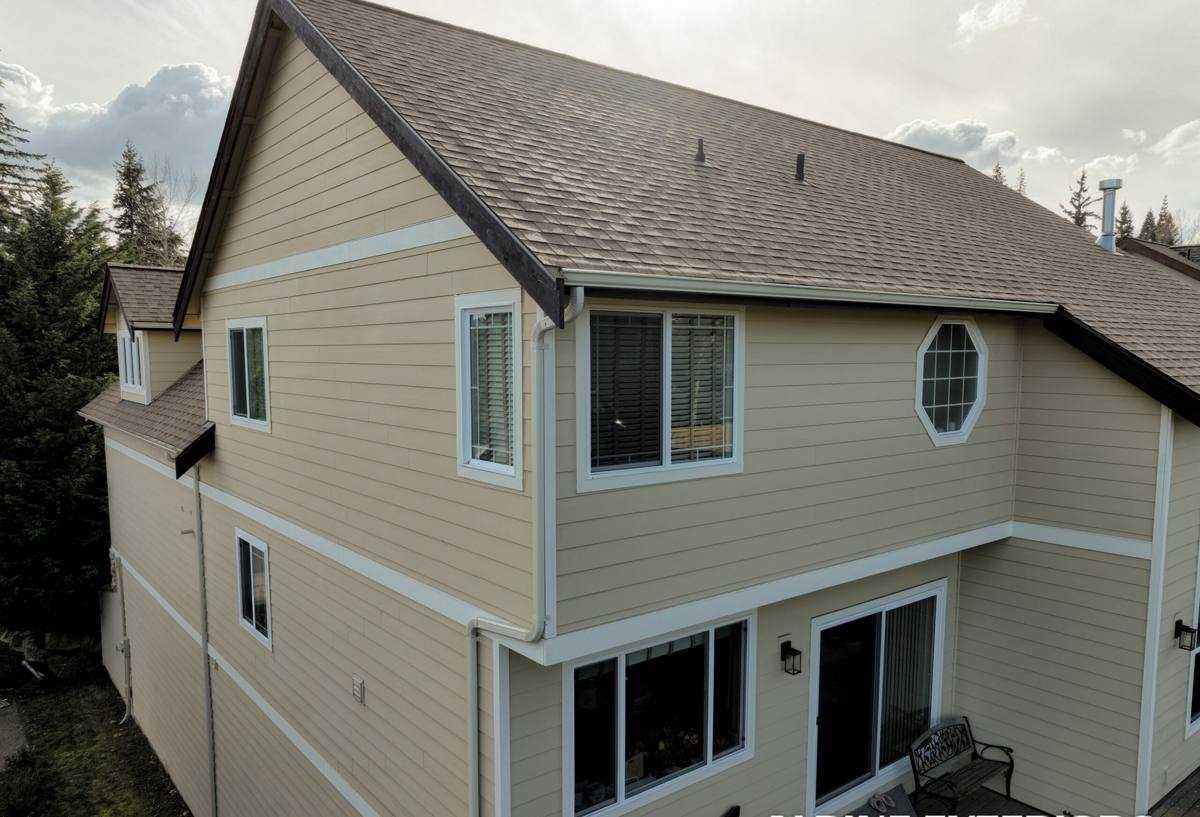
Signs a Similk Beach Roof Needs Replacing, Not Patching
Homeowners often call us for a repair quote and find out a full replacement is the more honest answer. Here's what tells us a roof has reached the end of its useful life rather than needing another patch:
- Granule loss heavy enough that you're finding sand-like debris in gutters every season, not just after a storm
- Shingles that are curling, cupping, or cracking, especially on south and west-facing slopes that get the most sun and thermal cycling
- Moss or algae growth that keeps coming back within months of cleaning, a sign the shingle surface is holding moisture rather than shedding it
- Soft or spongy decking felt underfoot during inspection, which points to trapped moisture under the roofing material
- Daylight visible through the attic roof deck, or water staining on attic sheathing and rafters
- Flashing around chimneys, vents, and valleys that's rusted, lifted, or was never properly integrated with the roofing material in the first place
- A roof already past 20-25 years for asphalt shingle systems in this climate, even if it looks okay from the ground
If a roof is showing two or more of these, patch repairs usually just delay a full tear-off — and in the meantime, moisture is getting into the decking, which turns a roofing job into a decking and roofing job.
Choosing a Roofing System Built for Waterfront Exposure
There's no single "best" roofing material for every home — it depends on the roof's pitch, the home's structure, and how much upkeep the owner wants to do. What matters for a Similk Beach property is picking a system and installing it in a way that accounts for salt air and constant moisture exposure.
Comparing common roofing options for this area
| Material | Typical lifespan here | Moss/moisture behavior | Maintenance |
|---|---|---|---|
| Architectural asphalt shingles | 25-30 years | Good drainage design; needs periodic moss treatment | Low to moderate |
| Standing seam metal | 40-50+ years | Sheds moisture and debris very well; minimal moss issues | Low |
| Synthetic/composite shingles | 30-50 years | Resists moisture absorption well | Low to moderate |
| Cedar shake | 20-30 years with upkeep | Absorbs moisture; needs regular treatment near saltwater | High |
We're candid with Similk Beach homeowners about cedar shake specifically: it can look great, but wood roofing absorbs moisture, and in a marine climate with a long wet season, that means more frequent treatment and inspection to keep it performing. That's a maintenance trade-off worth knowing before you commit, not a knock on the material itself.
Fasteners and flashing matter as much as the shingle
Salt air accelerates corrosion on standard fasteners and thin flashing over time. On homes close to the water, we specify corrosion-resistant fasteners and properly gauged flashing at every penetration — chimneys, plumbing vents, skylights, and valleys — because these are the points where a roof actually fails first, long before the field shingles wear out.
What a Correct Installation Actually Involves
Tear-off and deck inspection
We remove the existing roofing down to the deck rather than layering over it. This lets us see the sheathing condition directly — soft, delaminated, or water-stained decking gets identified and replaced before anything new goes down. Installing new roofing over a compromised deck just hides a problem that will resurface.
Underlayment strategy for wind-driven rain
Given how often storms here push rain sideways, we pay close attention to underlayment coverage, especially at eaves, valleys, and around penetrations. Self-adhering ice-and-water membrane goes in the areas most vulnerable to wind-driven moisture intrusion, with synthetic underlayment across the rest of the field for a consistent secondary moisture barrier under the shingles.
Flashing sequencing
Flashing has to be integrated in the correct order with the underlayment and roofing material — step flashing woven with each shingle course at walls, proper valley metal, and counter-flashing at chimneys. Flashing installed out of sequence, or caulked in as an afterthought, is one of the most common causes of the leaks we get called out to fix on other contractors' work.
Ventilation
A roof system needs balanced intake and exhaust ventilation to let moisture escape the attic space. Without it, warm interior air condenses against the underside of the roof deck, which speeds up rot and gives moss and mold exactly the damp environment they need. We check and correct ventilation as part of every installation, not as an upsell.
Our Installation Process for Similk Beach Homes
- On-site inspection and estimate — we assess the existing roof, decking, ventilation, and any problem areas specific to the home's exposure, then give a written, itemized estimate.
- Material selection — we walk through the options and trade-offs above so the decision fits the home's style, budget, and how much upkeep the owner wants going forward.
- Scheduling around weather — we plan installations for stretches of drier weather where possible and stage the work so the deck is never left exposed longer than necessary.
- Tear-off and deck repair — full removal of old roofing, deck inspection, and replacement of any compromised sheathing.
- Underlayment, flashing, and roofing installation — installed in the sequence described above, with attention to every penetration and edge detail.
- Ventilation check and correction — intake and exhaust venting confirmed or upgraded as part of the job.
- Final walkthrough — we go over the completed roof and cleanup with the homeowner before calling the job done.
Moss Season: Prevention Beats Removal
Moss doesn't just sit on a roof looking bad — its root structures work into shingle granules and seams, holding moisture against the surface and shortening the roof's life. A new installation gives you the chance to build in moss resistance from day one: proper slope-appropriate material choice, and in some cases zinc or copper strips near the ridge, which release trace metal ions that inhibit moss growth as rain washes over them.
After installation, the single best thing a Similk Beach homeowner can do is keep gutters and valleys clear so water doesn't sit and give moss a foothold, and have the roof looked at every year or two rather than waiting for visible growth.
What Drives the Cost of a New Roof
Every roof is priced based on its own specifics, but the main factors that move the number are consistent from job to job:
| Factor | How it affects cost |
|---|---|
| Roof size and number of planes | More square footage and complexity means more material and labor |
| Pitch and accessibility | Steep or hard-to-access roofs require more safety setup and time |
| Material choice | Asphalt, metal, and composite systems carry different material and labor costs |
| Decking condition | Rotted or soft sheathing found during tear-off adds repair cost |
| Flashing and penetrations | Chimneys, skylights, and multiple vents add detail work |
| Ventilation upgrades | Adding or correcting intake/exhaust venting if the existing system is inadequate |
We give a firm, written estimate after seeing the roof in person — not a phone-quote guess — because the honest number depends on what we find once the old roofing comes off.
Why a Crew That Already Works Similk Beach Matters
A contractor who works this stretch of Skagit County regularly already knows how salt exposure, wind direction off the water, and the local moss cycle behave on roofs out here — that's not something you learn from a spec sheet. It shows up in the small decisions: which fastener grade to use, how much ice-and-water membrane to run at the eaves, where moss tends to establish first on this type of roof geometry. Those judgment calls, made correctly and consistently, are the difference between a roof that needs attention again in eight years and one that goes the full distance of its rated life.
It also means a contractor who's still local next year, and the year after, if you ever have a question about how the roof is holding up.
Get a Straightforward Estimate
If your Similk Beach roof is showing its age, or you just want an honest opinion on how much life it has left, we're happy to take a look. Use the form below to request a free, no-pressure estimate — we'll assess the roof in person and give you a clear, written picture of what it needs and what it will cost.