 Anacortes Siding
 Roof Repair Built for Similk Beach's Waterfront Conditions
Similk Beach sits close to the water on the Fidalgo Island side of Skagit County, and that location shapes everything about how a roof ages here. Homes in this shoreline community deal with a mix of salt-laden air off the Sound, near-constant winter rain driven sideways by wind off the water, and a moss season that runs longer than it does just a few miles inland. A roof repair here isn't the same job as a repair on a dry, sheltered lot in town. It has to account for corrosion, wind-driven water intrusion, and organic growth working on the roof at the same time, often in the same spots.
We repair roofs in Similk Beach and the surrounding Anacortes waterfront neighborhoods on a regular basis, which means we're not guessing at how this environment behaves. We know which areas of a roof fail first out here, why they fail, and what actually holds up once we've made the repair.
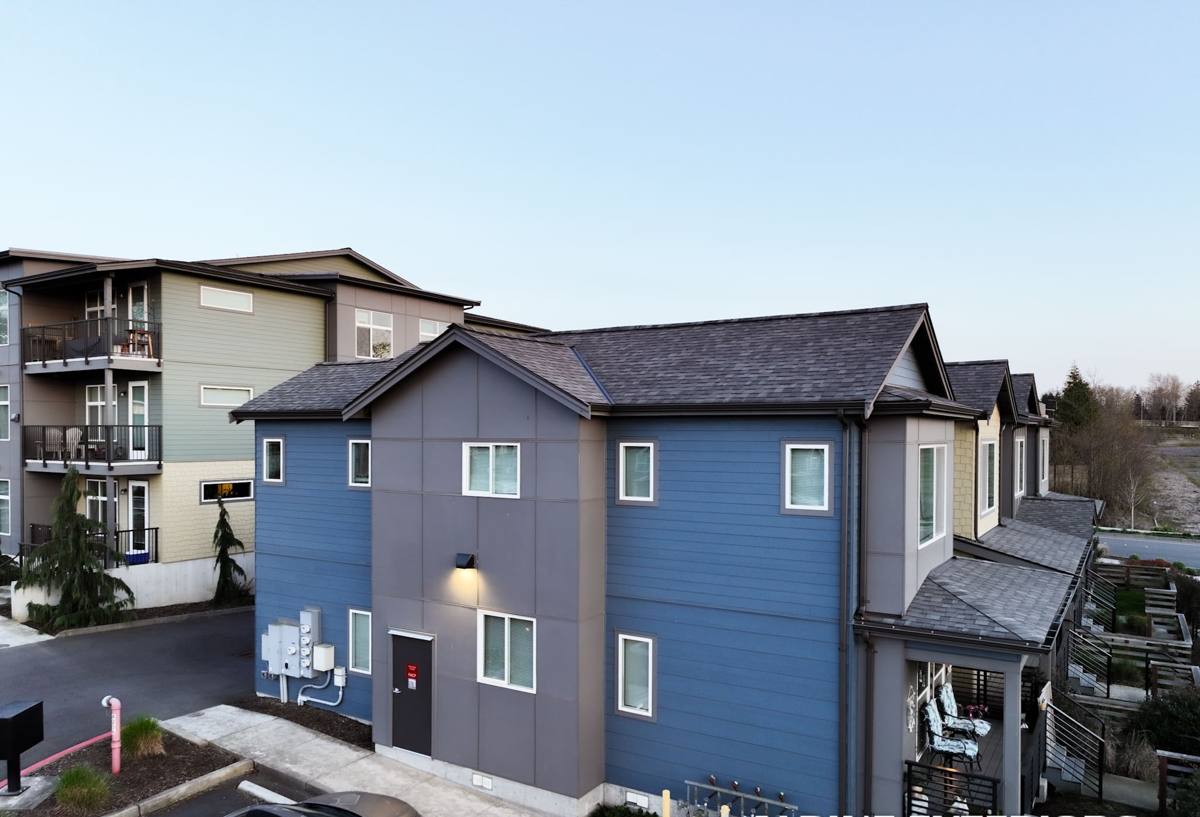
Why Roofs Near the Water Wear Differently
Salt Air and Metal Fatigue
Salt air accelerates corrosion on anything metal on a roof — flashing, fasteners, vent caps, gutter hardware. Galvanized materials that would last decades further inland can start showing rust and pitting years earlier this close to Puget Sound. Once flashing corrodes, it stops sealing properly, and that's when water starts finding its way under shingles or behind siding at the roofline.
Driving Rain and Wind Exposure
Open water exposure means wind isn't blocked the way it is in more sheltered parts of Anacortes. Rain doesn't just fall on a Similk Beach roof, it gets pushed sideways into laps, seams, and any gap in the flashing. A repair that would hold up fine on a calm, tree-shaded roof can leak here if it wasn't built to handle wind-driven water specifically.
A Longer Moss Season
Cool, damp, shaded roof sections stay wet longer near the water, and moss takes hold faster and grows longer into the year than it does on drier lots. Moss isn't just cosmetic — as it grows under shingle tabs and along ridges, it lifts materials, holds moisture against the roof deck, and creates the exact conditions that lead to rot and granule loss.
Signs a Similk Beach Roof Needs Repair, Not Just a Look
Because of the salt, wind, and moss combination, small problems here tend to turn into water intrusion faster than in more protected parts of the county. Here's what we'd want you to call about:
- Rust streaks running down from flashing, vent boots, or metal ridge caps
- Moss buildup along the north-facing slope or in valleys that stays wet even on dry days
- Shingles that look cupped, curled, or lifted at the edges, especially on the side facing the water
- Granules collecting in gutters or at the base of downspouts
- Any water stain on an interior ceiling, even a faint one — by the time it's visible inside, the leak has usually been active for a while
- Soft or spongy spots when walking the roof, which usually mean the deck underneath has absorbed water
- Daylight visible through the roof deck from inside an attic space
Any one of these on its own might be a minor fix. Several at once, or anything paired with an interior stain, means it's worth having someone look at it before the next round of winter storms.
What a Correct Repair Actually Involves
A roof repair that's done right in Similk Beach goes past just replacing what's visibly damaged. A patch that only covers the surface problem without addressing what let water in tends to fail again within a season or two, and in a location this exposed, that's an expensive way to find out.
Finding the Real Source
Water almost never shows up directly below where it entered. It travels along the underlayment, deck, or framing before it drips somewhere visible. Before we replace anything, we trace the path back to where the roof actually failed — often at a flashing seam, a nail pop, or a valley — rather than just patching the spot where the stain appeared.
Replacing Corroded Flashing Properly
Given how fast metal corrodes this close to the water, flashing is one of the first things we check on any Similk Beach repair. Rusted or pitted flashing gets replaced, not sealed over. Caulk and roof cement over corroded metal is a short-term cover-up — it looks fixed for a season, then reopens once the sealant weathers.
Addressing the Roof Deck
If moisture has been sitting under lifted shingles or trapped moss for any length of time, there's a real chance the plywood or OSB deck underneath has softened. We check for this on every repair, because shingling over a compromised deck doesn't hold fasteners well and won't stand up to the next windstorm off the water.
Matching Materials Correctly
Patch repairs should match the existing roofing as closely as possible in material, profile, and where reasonable, color and age-weathering. A mismatched patch isn't just a cosmetic issue — different materials can expand, contract, and shed water differently, which creates new seams where water can get in.
Repair or Replace? What Actually Drives That Decision
Not every roof problem near the water needs a full replacement, but the salt-air and moss conditions here do shorten the window where a repair still makes sense. These are the factors we actually weigh:
| Factor | Leans Toward Repair | Leans Toward Replacement |
|---|---|---|
| Age of roofing | Under roughly 12-15 years, sound elsewhere | Nearing or past manufacturer lifespan |
| Extent of damage | Localized to one flashing point, vent, or valley | Multiple failure points across different slopes |
| Deck condition | Solid, dry decking under the damaged area | Soft or delaminated decking found on inspection |
| Moss/algae history | Manageable with cleaning and targeted repair | Widespread, recurring moss lifting shingles roof-wide |
| Flashing and metal condition | Isolated corrosion, rest intact | Rust and pitting spreading across most metal components |
We'll give you a straight answer on which side of that line your roof falls on. If a repair genuinely solves the problem, that's what we'll recommend — we don't have any reason to push a replacement a roof doesn't need.
Materials That Hold Up in This Environment
Not every roofing product performs the same way under constant salt air and driving rain, and that shapes what we use for repairs in Similk Beach specifically.
Flashing and Fasteners
We use corrosion-resistant flashing and fasteners for repairs in waterfront areas rather than standard galvanized components. It costs a little more up front, but replacing rusted flashing again in five years costs more than that difference.
Shingle and Underlayment Choices
For asphalt shingle roofs, we favor architectural shingles with stronger sealant strips over lighter-weight 3-tab products in wind-exposed spots, since wind uplift is a bigger factor here than on a sheltered inland lot. Underlayment matters just as much as the shingle on top of it — a quality synthetic or self-adhering underlayment at vulnerable points like valleys and eaves gives the roof a second line of defense if wind ever drives water past the shingle layer itself.
Sealants We Trust — and What We Avoid
We're selective about sealant and roof cement products, since low-grade sealants break down faster under UV and salt exposure and end up needing to be redone within a year or two. It's a maintenance burden we'd rather you not inherit, so we use products rated for the exposure and apply them as a supplement to proper flashing work, not a substitute for it.
How We Handle a Roof Repair Job, Start to Finish
- Inspection. We get on the roof (or use a camera where access is limited) and check the full roof, not just the reported problem area — given how conditions here can affect multiple spots at once, a full look is worth it.
- Honest diagnosis. We explain what's actually failing, why, and what your realistic options are, in plain language.
- Written scope and estimate. You'll know what's being repaired, with what materials, and roughly what it costs before work starts.
- The repair itself. Damaged materials come out, the deck gets checked, flashing and underlayment get properly replaced, and new materials are matched and installed to shed water the way the rest of the roof does.
- Cleanup and final check. We clear debris and old materials, then walk the repair with you if you'd like to see it.
Why It Matters to Hire a Crew That Already Works This Neighborhood
A roofer who mostly works drier, more sheltered parts of Skagit County can still do competent work, but they're not necessarily used to diagnosing salt-accelerated corrosion or building in extra wind-driven-rain protection as a matter of habit. Crews that regularly work Similk Beach and the rest of Anacortes's waterfront know which flashing details tend to fail first out here, which materials are worth the upgrade, and where a "standard" repair approach falls short in this specific environment.
That familiarity also means a faster, more accurate diagnosis. We're not learning how this microclimate behaves on your roof — we already know what to check first, which saves you time and unnecessary exploratory work.
Keeping a Repaired Roof Solid Between Visits
Once a repair is done, a few habits go a long way toward making it last in this environment:
- Keep gutters clear so water isn't backing up against the roof edge, especially after fall storms
- Have moss treated or removed before it spreads under shingle tabs, not after
- Trim back overhanging branches where possible to cut down on shade, debris, and moss-friendly conditions
- Have the roof looked at after any unusually severe windstorm, even if nothing looks obviously wrong from the ground
- Address small leaks immediately rather than waiting to see if they get worse — near the water, they usually do
If you're dealing with a leak, visible moss buildup, or you just want a second opinion on a roof near the water in Similk Beach, we're glad to come take a look. The estimate is free, there's no pressure attached to it, and you'll get a straight answer about what your roof actually needs.