 Anacortes Siding
 Why Similk Beach Homes Wear Out Siding Faster
Similk Beach sits close enough to the water that homes here take a different kind of beating than houses further inland in Skagit County. The combination of salt-laden air off Similk Bay, wind-driven rain coming straight off the water, and a long, damp moss season adds up to years of accelerated wear on exterior siding. It's not one dramatic storm that does the damage — it's the slow, steady exposure that adds up month after month, year after year.
Salt air is corrosive to fasteners and hard on paint film, breaking down surface coatings faster than homes just a few miles inland. Driving rain doesn't just wet the surface of a wall — when wind pushes water sideways, it finds every seam, lap, and fastener hole in a siding system and tests whether that system was actually built to keep water out or just look good on a sunny day. And moss, which thrives in the shaded, moisture-retentive conditions common around Similk Beach's tree cover, holds water against siding surfaces for extended periods, which is exactly the kind of sustained dampness that wood-based and poorly-sealed siding products can't tolerate long-term.
Any siding replacement in this neighborhood has to be evaluated against these three specific stressors, not against generic "Pacific Northwest weather" assumptions. A product or installation detail that holds up fine in a drier part of Skagit County can fail here years sooner.
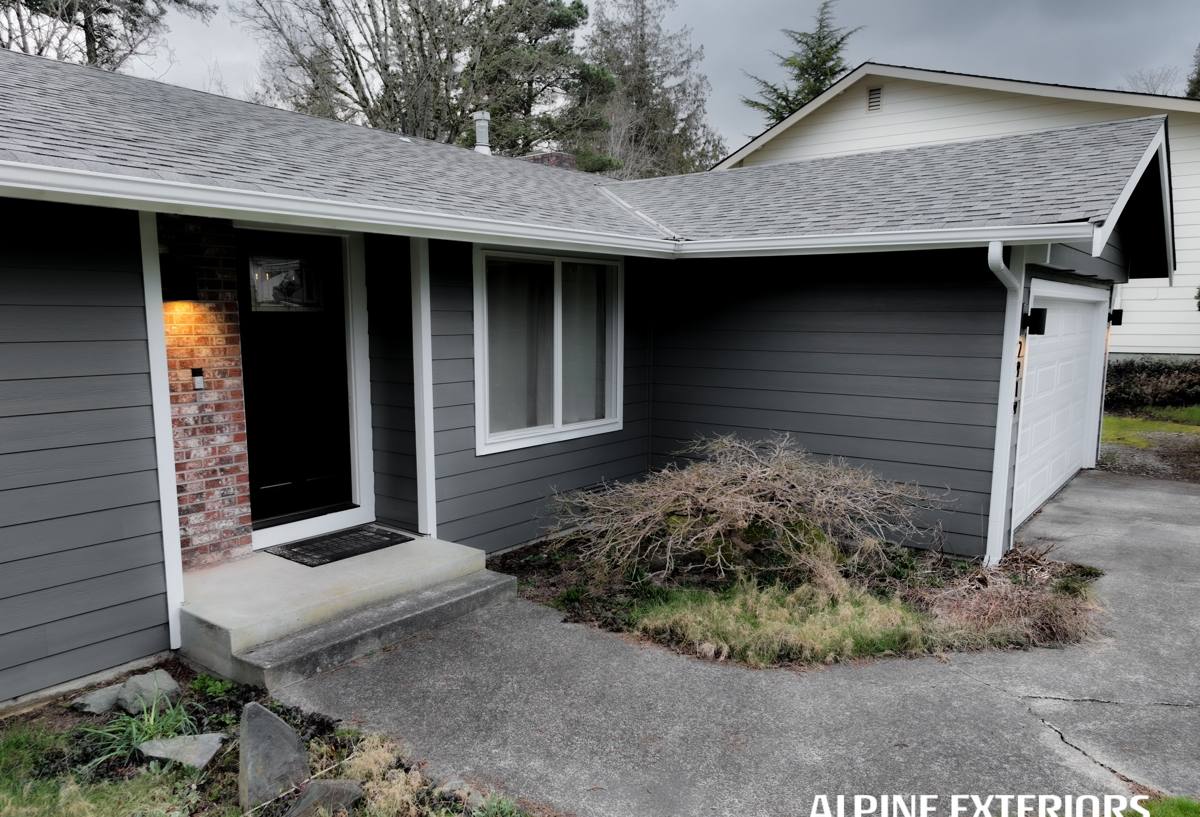
Signs a Similk Beach Home Needs Siding Replacement
Homeowners near Similk Beach should watch for a specific set of warning signs, since salt exposure and moss growth create failure patterns that aren't always obvious from the ground.
- Soft or spongy spots when you press on the siding, especially near the bottom courses and around window trim
- Paint that's chalking, peeling, or losing adhesion faster than a normal 7-10 year repaint cycle would suggest
- Persistent moss or algae staining that keeps coming back within a season or two of cleaning
- Visible gaps, warping, or cupping in lap siding boards, particularly on walls that face prevailing wind and rain
- Rust streaking from fasteners, a sign that fastener corrosion has already started working its way through the siding face
- Rising interior humidity, musty odors, or unexplained moisture near exterior walls
Any one of these can be a minor fix. Several at once, especially on a home that's had one siding system its whole life, usually means the underlying material and moisture barrier are reaching the end of what they can protect against.
Why We Install James Hardie Fiber Cement Here — and Nothing Else
We standardized on James Hardie fiber cement siding for every project we take on, including replacements around Similk Beach, and we don't install vinyl, LP SmartSide, cedar, primed spruce, Cemplank, or Allura. That's not a marketing position — it's a decision based on what actually holds up under salt air, driving rain, and a long moss season without demanding constant upkeep from the homeowner.
Non-Combustible and Dimensionally Stable
Fiber cement doesn't expand and contract with moisture the way wood-based products do, and it isn't a fuel source the way wood siding is. That dimensional stability matters directly in a wet climate: siding that swells and shrinks with every rain cycle eventually opens gaps at seams and fasteners, which is exactly where water gets in.
Factory-Applied ColorPlus Finish
Hardie's ColorPlus finish is baked on at the factory under controlled conditions, which gives it better UV and moisture resistance than field-applied paint. In a salt-air environment where paint film breakdown is one of the first visible signs of siding failure, that factory finish buys years of extra life before a repaint is even a conversation.
Climate-Engineered Product Lines
James Hardie makes HZ10 and HZ5 product lines specifically engineered for different climate zones, including the wetter, milder conditions found throughout Western Washington. That means the siding going on a Similk Beach home isn't a one-size-fits-all product — it's formulated for exactly this kind of moisture exposure.
Warranty Backing
Hardie backs its siding with a strong, transferable limited warranty, which matters both for peace of mind and for resale value if a Similk Beach home changes hands down the road.
We're upfront that other products have real strengths — vinyl is inexpensive, cedar has a genuine natural look, LP SmartSide is lighter to handle. But every one of those products asks the homeowner to accept a trade-off — more maintenance, more moisture sensitivity, more installation-detail risk, or a weaker warranty structure — that we don't think makes sense for homes exposed to this specific combination of salt, wind-driven rain, and moss. Hardie is the product we're willing to put our name behind.
What a Correct Siding Replacement Actually Involves
Replacing siding is not just pulling off old boards and nailing up new ones. Done correctly, especially in a salt-air, high-moisture setting like Similk Beach, it involves several layers working together.
Full Tear-Off and Substrate Inspection
Old siding comes off completely so the sheathing underneath can be inspected for rot, soft spots, or hidden moisture damage. Skipping this step and installing new siding over compromised sheathing just hides a problem that will resurface.
Weather-Resistive Barrier and Flashing
A properly lapped weather-resistive barrier, correctly integrated flashing at windows, doors, and penetrations, and attention to how water is meant to drain down and out of the wall assembly are what actually keep driving rain from reaching the framing. This is the part of the job that's invisible once the siding goes back on, but it's the part that determines whether the wall stays dry for the next 30 years or the next three.
Correct Fastening and Clearances
Fastener type, spacing, and depth all affect how well fiber cement siding resists both wind load and moisture intrusion. Proper ground clearance and gaps at trim also give bulk water somewhere to go instead of wicking into the bottom edge of the siding.
Trim, Caulking, and Finish Details
The finish details — corner trim, caulking at joints, touch-up of factory-cut edges — are what determine how the job looks and performs over time, particularly in an area where moss and algae will find any weak seam eventually.
Our Process for a Similk Beach Siding Replacement
- On-site assessment — we walk the exterior, check for soft spots and moisture entry, and look at how the home is oriented relative to prevailing wind and rain exposure off the water.
- Written scope and product selection — we recommend the appropriate James Hardie HZ product line, plank profile, and color, and put the scope of work in writing before anything is scheduled.
- Tear-off and substrate repair — old siding comes off, sheathing is inspected, and any rot or damage is repaired before new material goes up.
- Barrier, flashing, and install — weather-resistive barrier, flashing, and Hardie siding go on to manufacturer specification, which is what keeps the warranty valid and the wall assembly dry.
- Final walkthrough — we go over the finished job with the homeowner before calling it complete.
What Affects the Cost of a Siding Replacement
| Factor | Why It Matters in Similk Beach |
|---|---|
| Extent of hidden moisture damage | Homes with long-term moss coverage or past leaks often need sheathing or framing repair before new siding goes on |
| Home size and wall complexity | More corners, trim, and window/door openings mean more flashing and labor detail |
| Siding profile and finish | Lap width, texture, and ColorPlus color selection affect material cost |
| Access and site conditions | Sloped lots, tree cover, or tight setbacks near the water can affect staging and labor time |
| Existing siding removal | Multiple old layers or hazardous materials like old paint can add to tear-off scope |
Every home is different, which is why we give a written estimate after an on-site look rather than a number over the phone.
Why Local Experience Matters for This Job
A crew that already works Anacortes and the surrounding Skagit County shoreline knows how differently homes near the water age compared to homes further inland. We've seen how moss builds up on north-facing walls under tree cover, how driving rain off Similk Bay tests flashing details that would never be stressed on a drier lot, and how salt air shortens the useful life of paint and fasteners that would last much longer elsewhere. That experience shapes real decisions on the job — where extra flashing attention matters most, which walls need closer inspection during tear-off, and how to set expectations for long-term upkeep in this specific setting.
Simple Maintenance Steps That Extend Siding Life Here
- Rinse siding annually to remove salt residue and slow moss and algae buildup
- Trim back tree branches and shrubs that keep siding shaded and damp
- Check and re-caulk trim joints every few years, especially on rain-exposed walls
- Walk the exterior after major windstorms to check for loose trim or fastener issues
- Keep gutters and downspouts clear so roof runoff isn't adding extra water load to walls below
If your Similk Beach home is showing any of the wear signs above, or you're just planning ahead for a siding project, we're happy to take a look and put together a free, no-pressure estimate. Fill out the form below and we'll go from there.