 Anacortes Siding
 Why West Anacortes Decks Wear Out Faster Than the National Average
A deck in West Anacortes lives a harder life than the same deck built inland. Sitting out on Fidalgo Island means near-constant exposure to marine air moving in off the water, long stretches of overcast and drizzle through fall and winter, and shaded yards where moss and algae get a head start every year. None of this is dramatic on its own, but stacked together over a decade it adds up to soft ledger boards, corroded fasteners, and decking that looks fine from six feet away but is quietly failing underneath.
Salt Air and Marine Exposure
Homes closer to the water pick up a fine layer of salt-laden moisture that settles on exposed wood and metal. It doesn't take a beachfront lot to feel it — prevailing air off the Salish Sea reaches well into West Anacortes neighborhoods. Over time this accelerates corrosion in standard fasteners and hardware, and it speeds up the breakdown of any finish or sealant that isn't rated for coastal use.
Moss, Shade, and Standing Moisture
Skagit County's long moss season isn't just a roof problem. Decks tucked under mature trees or on the shaded side of a house stay damp for days after a storm, which is exactly the environment moss and mildew need to take hold on decking boards, railings, and stair treads. Once moss establishes itself, it holds moisture against the wood surface, and that's where rot usually starts.
Driving Rain and Wind-Driven Water
Anacortes gets its share of wind off the water, and wind-driven rain finds its way into places vertical rain never would — behind ledger boards, under loose flashing, into end-grain cuts that were never sealed. A deck built for a drier climate, without attention to these details, will show problems here years before it would somewhere inland.
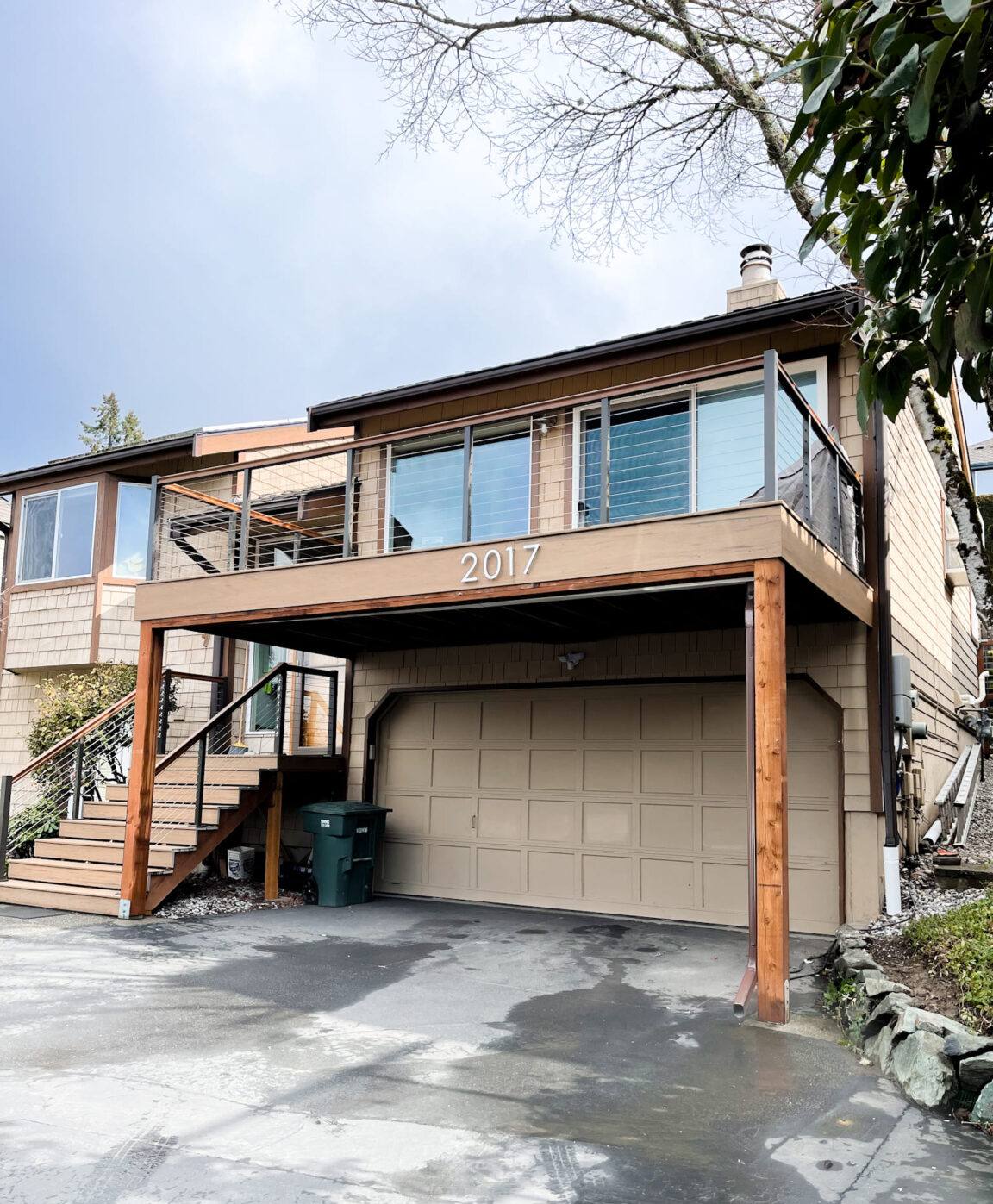
Signs Your Deck Needs Replacement, Not Just Repair
Not every tired-looking deck needs to come out. But there's a point where patching boards is just delaying the inevitable and spending money that won't show up in the final result. Here's what tells us a deck has crossed that line:
- A screwdriver or awl sinks into the ledger board, joists, or posts with light pressure — a sign of internal rot, not just surface weathering
- Soft or spongy spots in the decking itself, especially near the house or in shaded corners
- Visible gaps or rust streaks where the ledger board meets the house, which often means water has been getting behind the flashing for years
- Railings that flex or feel loose at the post connections
- Persistent moss or black staining that comes back within weeks of cleaning
- Footings that have shifted, cracked, or settled unevenly
- A deck more than 15-20 years old built to older code, especially if it was never permitted or inspected
If it's mostly surface graying and a few loose boards, repair may be the honest answer. We'll tell you that directly — a replacement quote isn't the goal, a deck that's actually safe and sound is.
What a Correct Deck Replacement Involves
Full Tear-Off and Structural Inspection
A proper replacement starts with removing the old structure down to the posts and footings, not just the surface boards. This is the only way to actually see what's happening with the framing, the ledger connection, and the foundation. Skipping this step and building a new deck surface over an old, compromised frame just hides the problem for another few years.
Ledger Board and Flashing
This is the single most important detail on any deck attached to a house, and it's the place most failures start in our climate. The ledger board needs proper flashing that directs water away from the house sheathing, correct fastener spacing rated for the load, and a gap or membrane that keeps moisture from wicking into the connection. In a region with as much sustained rain as Skagit County sees, a poorly flashed ledger is a slow leak waiting to happen, whether or not it's visible from the yard.
Footings and Framing
Footings need to sit below frost depth and bear on undisturbed, stable soil — something worth confirming rather than assuming, especially on older properties where the original footings may have been minimal. Framing lumber should be rated for ground contact or exterior use where relevant, with joist hangers and structural connectors in corrosion-resistant coatings suited to a marine-influenced climate, not the cheapest option on the shelf.
Decking, Railing, and Fastening
The visible surface is what homeowners notice first, but it's only useful if everything underneath it is done right. Fastener choice matters here too — stainless or coated fasteners rated for coastal exposure cost more up front and save you rust streaks and loosening hardware down the road.
Choosing the Right Decking Material for West Anacortes
There's no single "best" decking material — there's a best material for your budget, your sun exposure, and how much upkeep you actually want to do. Here's how the common options hold up in a shaded, damp, salt-influenced yard:
| Material | Moisture & Moss Behavior | Maintenance | Typical Lifespan |
|---|---|---|---|
| Pressure-treated wood | Absorbs moisture readily; needs sealing to resist rot and moss growth in shaded areas | Annual cleaning and re-sealing recommended | 10-15 years |
| Cedar | Naturally rot-resistant but still needs finish upkeep in constant damp; can gray and hold moss without care | Periodic cleaning and refinishing | 15-20 years |
| Composite decking | Doesn't absorb water or rot, but can still grow surface moss/mildew in deep shade — cleans off easily | Occasional washing, no sealing or staining | 25-30+ years |
| PVC decking | Fully moisture-resistant, best option for constantly shaded or low-airflow spots | Low — occasional washing | 25-30+ years |
We install all of these depending on what fits the home and budget. What we won't do is install any of them without addressing the structure underneath first — the nicest decking surface in the world doesn't fix a rotting ledger board or undersized footing.
Our Deck Replacement Process
- On-site evaluation of the existing deck, framing, ledger connection, and footings
- Honest assessment of whether repair or full replacement makes sense, with reasoning explained
- Written estimate covering materials, structural work, permitting where required, and timeline
- Removal of the old deck and disposal
- Structural rebuild: footings, framing, ledger flashing, and connections rated for our climate
- Decking, railing, and stair installation per your material choice
- Final walkthrough so you understand what was done and how to maintain it
Cost Factors for West Anacortes Deck Replacement
Every deck is different, so we don't quote prices without seeing the site, but these are the variables that actually move the number:
| Factor | Why It Matters |
|---|---|
| Deck size and shape | Square footage and complexity (angles, multiple levels) directly affect material and labor |
| Decking material | Composite and PVC cost more up front than wood but reduce long-term maintenance costs |
| Height and stairs | Elevated decks and stair runs add framing, railing, and code requirements |
| Existing structural condition | Rotted footings or ledger damage found during tear-off can add scope |
| Railing style | Cable, glass, and composite railing systems cost more than standard wood or metal balusters |
| Permitting | Structural rebuilds typically require a permit, which adds time and a fee but protects you at resale |
Permits and Building Code in Anacortes
A full deck replacement that involves new framing, footings, or a ledger reattachment generally requires a building permit through the City of Anacortes, and inspections along the way are part of doing the job correctly. This isn't paperwork for its own sake — it's what confirms the footings, framing, and ledger connection actually meet code for our snow and wind loads. We handle the permitting process as part of the job so you don't have to navigate it yourself, and it also means you have documentation of a properly built deck if you ever sell the home.
Maintenance That Keeps a New Deck Performing
A well-built deck still needs some attention in this climate to get its full lifespan. A short seasonal routine goes a long way:
- Sweep debris and standing leaves off the deck surface regularly, especially in fall
- Rinse or gently scrub moss and algae off the surface before it gets a foothold, particularly in shaded corners
- Check that gutters and downspouts near the deck are directing water away, not onto it
- Inspect the ledger board area yearly for any gaps, staining, or soft wood
- Re-seal wood decking on the manufacturer's recommended schedule; composite and PVC just need washing
- Tighten any loose railing connections as soon as you notice them
Why Hiring a Crew That Already Works West Anacortes Matters
A deck built to a generic national standard can still fail early here if it isn't detailed for our conditions — the flashing, fastener choice, and material selection all need to account for the salt air, rain, and shade that West Anacortes homes actually deal with. Working regularly in this specific area means we're not guessing at how a shaded, water-adjacent lot behaves over a Skagit County winter — we've seen what holds up and what doesn't, and we build accordingly the first time.
If your deck is showing its age or you just want an honest opinion on repair versus replacement, we're happy to take a look. Use the form below to request a free, no-pressure estimate for your West Anacortes home.