 Anacortes Siding
 Siding on Fidalgo Island's West Side Has a Harder Job Than Most
West Anacortes sits about as close to the water as a Skagit County home can get. That location is why people move here, and it's also why the siding on these homes works harder than siding almost anywhere else in the county. Between the salt-laden air off Rosario Strait and Guemes Channel, driving rain that comes in sideways during winter storms, and a moss season that can stretch from fall through spring, exterior walls here are under near-constant pressure. A siding product that performs fine twenty miles inland can fail early on this side of the island.
We install James Hardie fiber cement siding exclusively, and West Anacortes is exactly the kind of environment that explains why. This page covers what the local climate actually does to siding, what a correct Hardie installation looks like out here, and how our process is built around the conditions specific to this part of Anacortes.
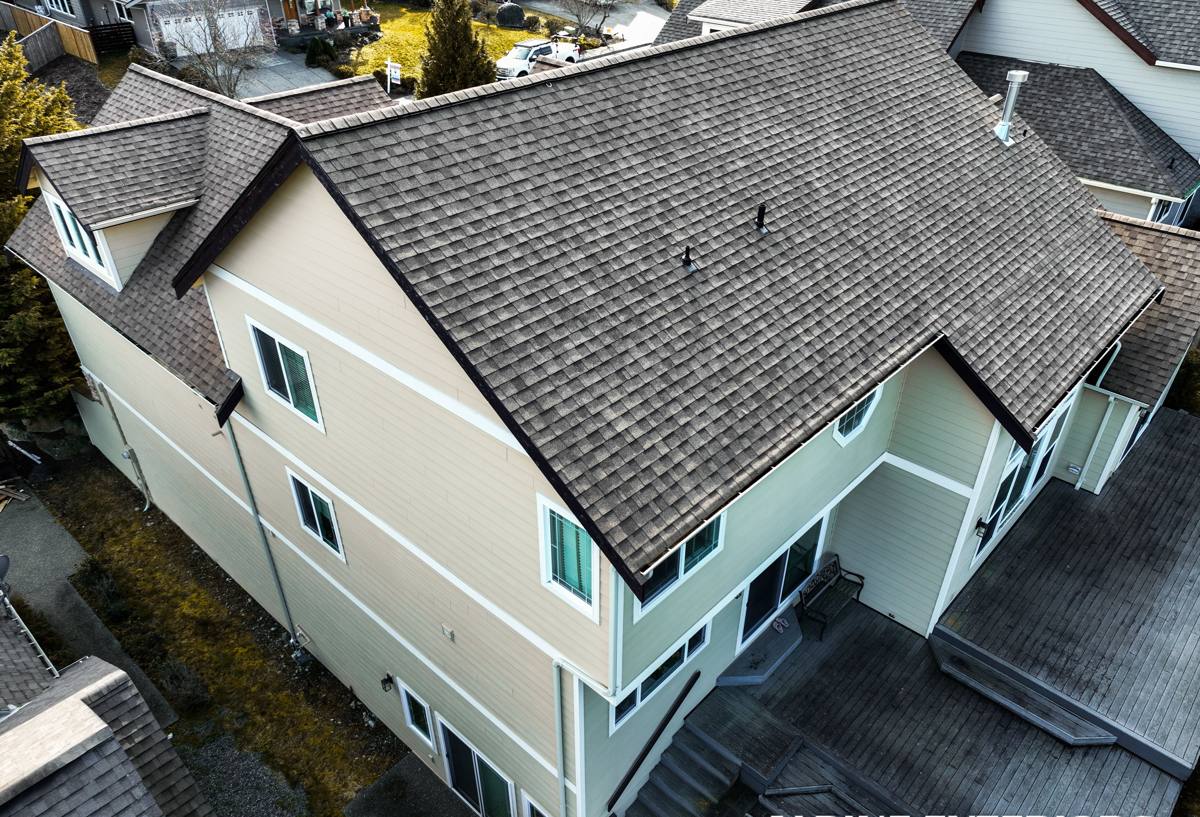
What Salt Air, Rain, and Moss Actually Do to a House
Each of these three factors stresses siding in a different way, and most siding failures we get called out to inspect are the result of two or three of them working together over several years.
Salt Air
Airborne salt is corrosive to metal fasteners and trim, and it accelerates the breakdown of many paints and coatings. On homes closer to the water, salt residue settles on siding surfaces and can hold moisture against the wall longer than it would in a drier inland location. Over time this shows up as premature fading, chalking, or fastener corrosion on materials not engineered to handle it.
Driving Rain
Anacortes gets weather systems that push rain horizontally, not just straight down. That means water gets driven into joints, seams, and butt ends that would stay dry in a calmer climate. Any siding product is only as good as its weakest seam — and on the west side of the island, those seams get tested a lot more often.
Moss and Algae
Shaded, moisture-retaining surfaces here grow moss and algae readily, especially on north- and west-facing walls that don't get much sun exposure. Moss holds water against the surface it's growing on. On materials that swell, delaminate, or rot when chronically damp, that's a slow but steady path to damage. On a properly finished fiber cement product, it's mostly a cosmetic issue that periodic cleaning handles.
Why We Standardized on James Hardie for This Climate
James Hardie fiber cement is manufactured for climate-specific performance, not a one-size-fits-all product. Their HZ5 formulation, engineered for the wetter, more humid climate zones the Pacific Northwest falls into, is designed to resist moisture-related damage — cracking, swelling, and delamination — better than the general-purpose lines sold in drier regions. That distinction matters directly here: a product engineered for a dry climate and installed in West Anacortes is starting the job already at a disadvantage.
Fiber cement itself is non-combustible, which matters increasingly in this region, and it doesn't rot the way wood-based siding can when it stays damp. The factory-applied ColorPlus finish is baked on under controlled conditions and holds color and adhesion far better against salt air and UV exposure than field-applied paint, which is one of the biggest advantages in a marine environment where repainting every few years isn't something most homeowners want to sign up for.
We get asked why we don't install vinyl, LP SmartSide, cedar, or primed spruce instead. Each of those products has real strengths, but each also has a specific weakness that this climate tends to find — vinyl can warp and its seams are a chronic water-entry point in driving rain; wood-based products need consistent maintenance to keep moisture out once the factory coating is compromised; cedar requires ongoing sealing and is a natural food source for the fungi that thrive in a mossy, damp environment. We made a standard, and Hardie is the product that holds up to this specific coastline without asking the homeowner to fight the climate every year.
How the Major Siding Options Compare in a Marine Climate
| Material | Behavior in Salt Air & Driving Rain | Moss/Algae Resistance | Typical Maintenance |
|---|---|---|---|
| James Hardie (HZ5) | Engineered for wet climates; resists swelling and moisture damage when installed to spec | Factory finish resists staining; periodic wash keeps it clean | Occasional wash; no repainting for many years |
| Vinyl | Seams and panels can be forced by wind-driven rain; can warp with heat/cold cycling | Moderate; can trap moisture behind panels | Washing; replacement of cracked sections over time |
| LP SmartSide (engineered wood) | Vulnerable at cut edges and seams if coating is compromised | Susceptible if moisture penetrates the wood strand core | Coating inspection and touch-up; sealing exposed edges |
| Cedar / primed spruce | Natural material; absorbs and releases moisture, especially in driving rain | Naturally attractive to moss and fungal growth if damp | Regular sealing/staining and moisture monitoring |
This isn't a claim that the alternatives are unusable everywhere — it's why we decided a marine-exposed island community deserves a product built for exactly these conditions, installed by a crew that treats every seam and joint as a place water will eventually try to get in.
What a Correct Installation Involves Out Here
James Hardie siding performs the way it's engineered to only when it's installed correctly — and in a high-exposure area like West Anacortes, the margin for error is smaller than in a sheltered inland neighborhood. A rushed or generic install can undercut even the best material.
Water Management Comes First
Before a single piece of siding goes up, the wall needs a proper weather-resistive barrier, correctly lapped and sealed flashing at every window, door, and penetration, and a drainage plane that lets any incidental moisture escape rather than pool behind the cladding. In a driving-rain environment, this layer is doing more work than the siding itself.
Clearances and Gaps
Hardie's specifications call for specific clearances from grade, roof lines, decks, and other transitions, along with gaps at butt joints to allow for expansion. Skipping these details is one of the most common causes of long-term moisture problems we see when we're asked to look at another contractor's work.
Fastening
Corrosion-resistant fasteners, placed and set to the manufacturer's specification, matter more here than in a drier inland climate because of the added exposure to salt-laden air. Over- or under-driven nails compromise the board's ability to move and shed water as designed.
Caulking and Sealant Practice
Sealant should be used at specific transitions, not as a substitute for proper flashing everywhere. Over-reliance on caulk instead of correct flashing is a shortcut that fails first in exactly this kind of weather.
- Weather-resistive barrier installed and lapped correctly before siding goes on
- Flashing integrated at every window, door, and roof-to-wall transition
- Manufacturer-specified clearances maintained from grade, decks, and roofing
- Corrosion-resistant fasteners set to proper depth and spacing
- Butt joints gapped and shielded per Hardie's installation instructions
- Caulk and sealant used only where specified, not as a substitute for flashing
- ColorPlus-finished cut edges properly primed or capped where exposed
Our Process for a West Anacortes Project
We start with an on-site assessment that looks specifically at exposure — which walls face the prevailing wind and rain, where moss growth is already established, and whether the existing wall assembly has any signs of past moisture intrusion. That assessment shapes decisions about flashing details and product selection (including which Hardie profile and finish suits the home) before we ever talk about color.
From there, we handle removal of the old siding, inspection and repair of the sheathing underneath (a step that matters more here than in drier parts of the county, since hidden rot is more common on homes with long-term moisture exposure), installation of the water-management layer, and then the Hardie siding itself, installed to manufacturer spec rather than a shortcut version of it. We finish with trim, caulking at the appropriate transitions only, and a full cleanup.
Because we work this part of the island regularly, we're familiar with the wind exposure patterns and moss-prone orientations that come up house to house, which shapes small but real decisions — like where extra attention to flashing detail matters most on a given lot.
Cost Factors Specific to This Kind of Project
| Factor | Why It Affects the Price |
|---|---|
| Condition of existing sheathing | Hidden moisture damage found during tear-off may require repair before new siding can go on |
| Home size and wall complexity | More corners, transitions, and penetrations mean more flashing detail work |
| Siding profile and finish selection | Lap width, panel vs. plank, and trim choices affect material and labor cost |
| Site access and exposure | Waterfront or wind-exposed lots can require additional protection and staging considerations during install |
| Scope of trim and accessory work | Fascia, soffit, and trim replacement alongside siding adds to the overall project |
We provide a specific, itemized estimate after the on-site assessment rather than a rough figure over the phone — too much of the real cost depends on what's found once the old siding comes off.
Maintaining Hardie Siding in a Moss-Prone Environment
One advantage of a correctly installed, factory-finished fiber cement product is how little ongoing maintenance it actually needs compared to painted or natural wood siding. That said, West Anacortes' moss season means a little seasonal attention goes a long way toward keeping the exterior looking clean and shedding water the way it should.
- Rinse siding with a garden hose or soft wash (not a high-pressure wash, which can force water behind panels) once or twice a year, more often on shaded, moss-prone walls
- Keep gutters clear so overflow doesn't run down and hold moisture against siding below
- Trim back vegetation and tree limbs that keep walls shaded and damp longer than necessary
- Check caulking at trim transitions periodically and have any cracked or missing sealant addressed
- Have a professional inspect flashing and clearances every few years, especially on the sides of the house most exposed to wind-driven rain
Why a Crew That Already Works West Anacortes Matters
Siding installation isn't a generic process, and this stretch of Skagit County isn't a generic climate. A contractor who mostly works drier, inland jobs may not default to the flashing details, clearances, and moisture-management steps that matter most on a wind- and rain-exposed lot near the water. Familiarity with how a specific neighborhood's exposure, moss patterns, and typical wall conditions play out means fewer surprises during the project and a longer-performing result once it's done.
If you're weighing a siding project on a West Anacortes home, we're glad to walk the exterior with you, point out what we're seeing, and put together a straightforward, no-pressure estimate — no obligation, just a clear look at what your home actually needs. Use the form below to get started.